Second Order Security - Episode 7 - SOAR Games: Volume 2
Continuing our playbook building games, Dan and Tom heckle Danny through breaking down a master playbook into modular playbooks. Danny continues to screw up his audio.


Fast, reliable recovery is the whole reason we do backups in the first place. But the complexity of managing multiple backup products, juggling ever-growing local storage, keeping backup chains error free, and coordinating off-site backup storage can have a negative impact on the reliability that brings peace of mind. The more staff, people, and vendors are involved, the less likely your process will be consistent and error-free.
Yes, time travel is possible...through data. My ability to time travel began when I started coding at age 10. Back then, all of my code ran on my own little computer. Like many ten-year-olds, I coded to create and play games. I also coded cool graphics to accompany music to impress my friends and utilities for copying. I launched my first commercial website in 1996 and made 25 guilders, which was good money for a 15-year old. Life was so easy.
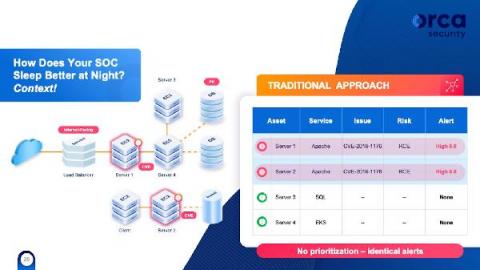
Security teams have the tough job of monitoring and securing every single workload in each cloud and for workloads in the development pipeline. Inevitably, these processes wind up being a bottleneck from the developer’s perspective, and developers get frustrated. Understandably, developers feel like security is simply making their jobs harder. But, on the other hand, security teams feel like they’re powerless to provide full coverage.
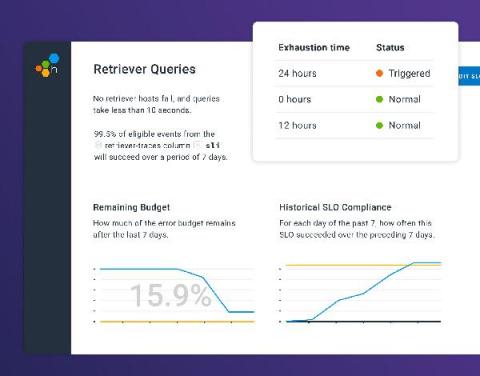
Modern software services are expected to be highly available, and running a service with minimal interruptions requires a certain amount of reliability-focused engineering work. At the same time, teams also need to build new features and improve existing ones, so that users are delighted and don’t churn.
The ability for security teams to integrate threat data into their operations substantially helps their organization identify potentially malicious endpoint and network events using indicators identified by other threat research teams. In this blog, we’ll cover how to ingest threat data with the Threat Intel Filebeat module. In future blog posts, we'll cover enriching threat data with the Threat ECS fieldset and operationalizing threat data with Elastic Security.
Though invisible to most users, APIs are the backbone of modern web applications. Developers love them because they facilitate complex integrations between systems and services. The business loves them because integrating disparate systems to create new products and services drives innovation and growth. The challenge with this transformative connectivity is the dependencies that exist between systems. API failure can result in performance degradation, data anomalies, or even system-wide outages.
It’s been a month since Dinesh and I humbly high-fived leaving the meeting with Charlie and Lucia and they gave us the green light to roll Moogsoft out across the whole of C&Js and I’m feeling a little weary. Change is hard. I’ve also made it harder on myself by persuading Charlie we should also migrate our service desk solution.
The rise of public cloud services has enabled businesses to innovate faster, scale effortlessly, and adopt more advanced technologies easier than ever before. However, there’s a dark side to using public cloud services: complexity and cost. Public cloud services can scale to handle almost any workload, but in doing so, they can quickly generate unpredictable costs for your business.