Operations | Monitoring | ITSM | DevOps | Cloud

How labels in Loki can make log queries faster and easier

For the majority of the first year that we worked on the Loki project, the questions and feedback seemed to come from people who were familiar with Prometheus. After all, Loki is like Prometheus – but for logs! Recently, however, we are seeing more people trying out Loki who have no Prometheus experience, and many are coming from systems with much different strategies for working with logs.
Customer Story: Why Freshly Cooks with Sentry

On the surface, food delivery service seems straightforward. However, creating a food delivery startup is more like building a transportation and logistics company than pizza delivery. Coordinating web and mobile applications for seamless ordering, tracking, and delivery, all within razor-thin service windows, takes an unprecedented level of complexity (when you get it right). And once you begin to scale service, the technical challenges become even greater.

How to deploy an app to AWS: Getting started

Launching a production app onto the cloud is a big task with a ton of tiny sub-tasks, and it can all be pretty overwhelming. We're here for you. We've launched an app ourselves (Blue Matador, our cloud infrastructure monitoring software). In the coming weeks, we will walk you through everything you need to know and do to successfully launch your app—with the least amount of effort.

Sharing and growing your OSS Project with Live Streaming

Your OSS project is looking better day by day. You've selected your preferred platform, frameworks, programming language and maybe a contributor or two. All is well except you aren't seeing the growth of your project as you'd like. Few stars and forks, and no open issues. What to do? This is where you can take advantage of live streaming communities to expand your OSS project's reach, code live as chatters ask questions and reuse the content for blog posts, YouTube and social media. By the end of this session, you'll have the tools and knowledge to successfully start live streaming.

Rails Performance: When is Caching the Right Choice?

We've all been there. You're clicking around your Rails application, and it just isn't as snappy as it used to be. You start searching for a quick-fix and find a lot of talk about caching. Take your existing app, add some caching, and voila, a performance boost with minimal code changes. However, it's not this simple. Like most quick fixes, caching can have long-term costs.

Five Ways AIOps Can Transform Your Enterprise

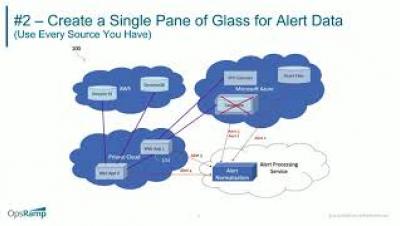
Artificial intelligence for IT operations is a new, emerging technology to help IT operations teams make sense of operational data. But how can it work for you? Join the OpsRamp AIOps experts and learn: How AIOps can help you proactively monitor for disruptions Where AIOps can speed detection and remediation of incidents Which alerts AIOps can automatically reduce from your system How to choose and evaluate an AIOps tool for your organization

Export RDS Snapshots Action

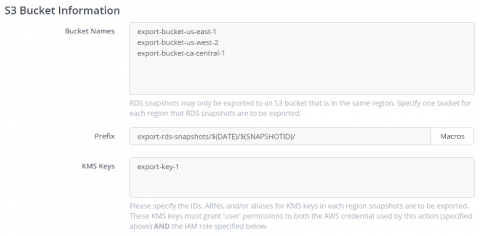
In January, AWS announced the ability to export RDS snapshots to S3. This new feature allows you to export your RDS data to S3 buckets in Apache Parquet format. Today, I’m happy to say that we’ve added a new action to help with this feature: Export RDS Snapshots. This new action will automate the process of exporting RDS snapshots to S3 on a daily basis.

Understanding & Leveraging AWS Auto Scaling Groups

An AWS Auto Scaling group (ASG) is a fleet of EC2 instances that can scale up or down depending on application demand. The elasticity of Auto Scaling groups makes them highly-attractive options for enterprises who do not want to invest in purchasing expensive hardware only to respond to sudden or temporary spikes in application demand.