
Operations | Monitoring | ITSM | DevOps | Cloud

When Does a Self-Service Portal Actually Reduce Tickets?

A self-service portal is designed to reduce IT support tickets by enabling employees to solve common issues on their own. But if self-service is supposed to improve efficiency, why do so many portals remain unused while help desk queues continue to grow? In this video, you'll learn what a self-service portal is, why many organizations struggle with low adoption, and the three key factors that determine whether your portal actually reduces ticket volume.

Best IT Help Desk Software in 2026: 10 Tools Compared

How do you pick the right IT help desk software when every vendor calls itself the best? It comes down to three things. Your team size, your deployment rules, and whether you need full ITSM or plain ticketing. A five-person startup can run support from a shared inbox. A 200-person IT team cannot. Add asset tracking, SLAs, and change control, and that inbox falls apart. The right IT support software routes tickets on its own, links every request to the asset behind it, and shows you where time goes.

What Is Packet Loss? Causes, Symptoms & How to Fix It

In this video, learn what packet loss is, why it happens, and how it silently impacts your network performance even when monitoring dashboards appear healthy. Discover the most common causes of packet loss, how it affects applications like video calls and web services, and why identifying the root cause quickly is critical for maintaining a reliable network.

8 Best Patch Management Software for 2026

Somewhere in your environment, a patch is sitting in a queue because the last rollout broke something, and nobody wants to run it again. That is the exact failure mode good patch management software is supposed to prevent, and multiplied across a few hundred endpoints, it is exactly the kind of gap attackers look for.

SLA vs SLO vs SLI Explained: What Should You Track?

In this video, learn the difference between SLA, SLO, and SLI and why understanding each one is essential for delivering reliable IT services. Discover how these three service level metrics work together and why tracking the right one helps improve service reliability, customer satisfaction, and operational performance. Whether you're an IT operations professional, SRE, DevOps engineer, or service manager, this video explains SLA, SLO, and SLI in simple terms so you can build measurable goals and realistic service commitments.

Unified Observability: Moving IT Teams from Reactive to Predictive

What does it take to stop an outage before it starts? In many cases, the warning signs are already there, scattered across different monitoring tools, which makes it difficult to see the full picture before issues escalate. When an incident occurs, engineers often spend valuable time piecing together metrics, logs, traces, and alerts to determine the root cause. Every minute spent investigating extends the outage and increases its business impact.

DevOps with Kubernetes: How to Reduce Cluster Toil and Complexity

Has Kubernetes made your DevOps team faster, or just busier? Most teams adopt it for speed and portability, and they get both. What arrives with it is a quieter cost: the operational weight of running the cluster day to day. That weight shows up in the manual work the platform was supposed to eliminate. A resource limit set incorrectly can waste infrastructure for months.

What is Network Configuration Management

Many network outages usually start with something as small as a configuration change that nobody logged. One undocumented edit to a firewall or a core switch can lead to the team losing hours working out what changed, on which device, and how to undo it. Across cloud, SD-WAN, and multi-vendor stacks, that guesswork only gets more expensive. Network configuration management takes the guesswork off the table.

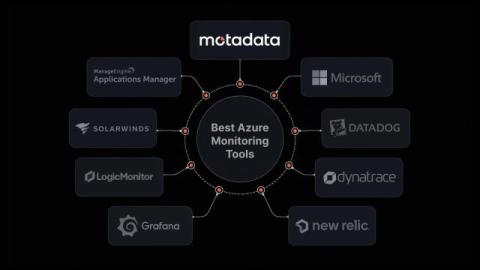
9 Best Azure Monitoring Tools Compared for 2026

When an Azure service slows down or stops responding, you often hear about it from a user before your monitoring says a word. It only gets harder as you scale: Azure now runs about a fifth of the world's cloud workloads (Statista, 2026), and every new service is one more place a failure can hide. By the end, you will have a shortlist for your stack. You will also know which tools to skip, without sitting through nine sales demos to find out.

What is DPDPA Compliance? A Complete Guide

If your organisation handles the personal data of people in India, the DPDPA applies to you and compliance is a legal requirement. The Digital Personal Data Protection Act, 2023 is now backed by the DPDP Rules 2025, and the Data Protection Board of India can impose fines of up to ₹250 crore for a single contravention. The obligation your IT and security teams own most directly is security safeguards under Section 8, and it is one of the first things a regulator looks at after a breach.