Operations | Monitoring | ITSM | DevOps | Cloud

How to aggregate your Metrics using MetricFire

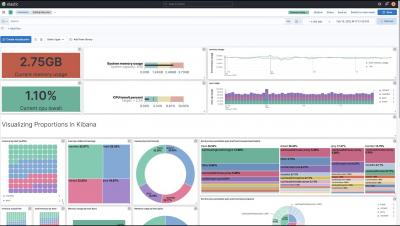
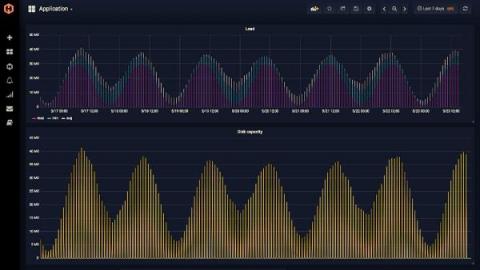
This article covers such a popular topic as using aggregation rules for metrics. We will learn why it is important to use aggregations and what tools exist for working with them. Also, we will explore all the benefits of using MetricFire's Hosted Graphite solution to store, process, analyze and monitor your metrics.


Handoff Communication in Healthcare

Handoff communication occurs when a patient is transitioned from one care setting to another. Communication is central to handoffs, and clinical staff are expected to share comprehensive details about the patient’s health to the next care provider in charge. During handoff, sensitive information is passed in real time to another care provider during changes in shift or care setting.

SQL Sentry Advisory Conditions Tutorials

As a customer success engineer, I hear directly from customers about what issues they need help solving with SolarWinds SQL Sentry®. This insight first motivated me to create posts for the SQL Sentry Tips & Tricks series, which explains how to get the most out of SQL Sentry. Now, I’d like to create more tutorials about what I consider to be one of the most powerful features in SQL Sentry: Advisory Conditions.

Top 12 Kubernetes Risks

What’s putting your K8s workloads at risk? You probably didn’t immediately think of memory and CPU resources—yet, these pose significant threats to cost and performance in your public cloud Kubernetes and OpenShift deployments. Learn about the top 12 K8s risks and how you can visualize the spread of risk in your containers deployment. You'll also hear a methodology for drilling down to individual misconfigurations and resolving them.

Shifting Left for DevSecOps Success

Not long ago, developers built applications with little awareness about security and compliance. Checking for vulnerabilities, misconfigurations and policy violations wasn’t their job. After creating a fully-functional application, they’d throw it over the proverbial fence, and a security team would evaluate it at some point – or maybe never. Those days are gone – due to three main shifts.

How to monitor RabbitMQ logs and metrics with Sumo Logic

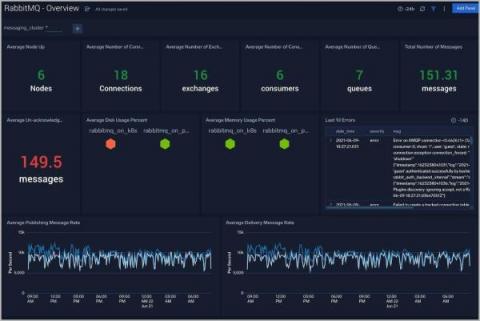
As organizations have moved toward a microservices design pattern, the need for reliable and performant solutions that enable decoupled services to communicate with one another has grown. RabbitMQ is an open-source message broker designed for this purpose. We’ll discuss what RabbitMQ is, how it works, why it needs to be monitored and how Sumo Logic can effectively do this.

Why Uptime.com Chose Apdex as a Performance Monitoring Standard

Early Twitter was an adventure. Every day was an open question: would you be able to log in or did the next big story crash the platform? It was taking off and crashing and flying and crashing again. All in real time. It was an exciting time for the internet, and while everything has changed since then it got us thinking: why did we used to tolerate stuff just not working? And why do we still tolerate stuff not working?

AppScope 1.0: Changing the Game for Infosec, Part 1

This is one of a series of blogs in which we introduce AppScope 1.0 with stories that demonstrate how AppScope changes the game for SREs and developers, as well as Infosec, DevSecOps, and ITOps practitioners. In the coming weeks, Part 2 of this post will tackle another Infosec use case. If you’re in Infosec, at some point you’ve doubtless had to vet an application before it’s allowed to run in an enterprise environment.