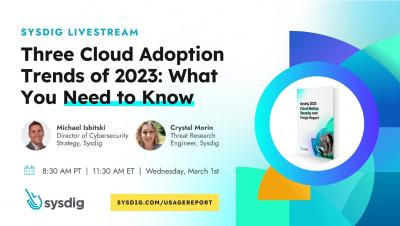
Sysdig Live: Three Cloud Adoptions Trends of 2023
How does your cloud environment stack up? Are you ahead of the curve or are you leaving security best practices on the table?


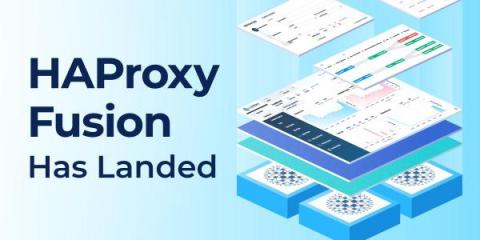
This is a big one. HAProxy Fusion Control Plane is here to give our customers the power to simplify, scale, and secure their HAProxy application delivery infrastructure using a centralized control plane. HAProxy Fusion enables your business to scale up, launch new products faster, and improve security and resilience.
How your code performs isn’t a subjective debate. Well, at least not anymore — in the past few months, Sentry has started telling you exactly what’s slow and where to fix it — specifically, N+1 database queries in your code. While we’ve all had to fix an N+1 problem, performance problems come in multiple flavors. Today, you’ll notice more Performance Issues in your issue feed, Slack alerts, and email notifications.
In August 2022, Checkly's security team successfully implemented and documented all necessary security controls to be SOC 2 compliant for the first time. To get our SOC 2 Type 1 report we had to prove that our engineering, HR, operational, and IT security processes met the high level of information security SOC 2 compliance demands to an accredited auditing firm.
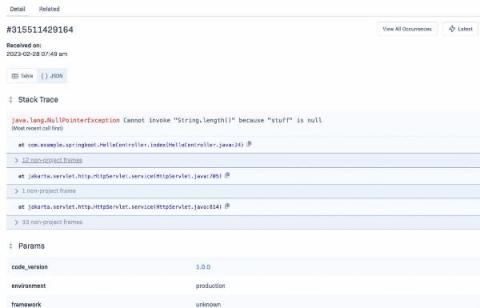
Debugging errors in your software often requires browsing stack traces (also called as backtraces or tracebacks). A stack trace is a sequence of stack frames which represents the chain of methods calling each other in your software. Rollbar collects your stack trace at the time a crash occurs – this way you will be able to know which pieces of code were active when an issue happened. You can find how to read stack traces in our previous blog post.
ScienceLogic’s SL1 is engineered to excel in today’s hybrid IT environments, discovering legacy gear buried in your on-premises data center as well as services and applications that live out in the cloud. SL1 is serious AIOps for IT operations teams that are serious about getting the most out of their investments in IT.
You'll notice that monitoring and logging don't appear on the list of core Kubernetes features. However, this is not due to the fact that Kubernetes does not offer any sort of logging or monitoring functionality at all. It does, but it’s complicated. Kubernetes’ kubectl tells us all about the status of the different objects in a cluster and creates logs for certain types of files. But ideally speaking, you won't find a native logging solution embedded in Kubernetes.
A few months ago, I wrote an article about a serious outage of Azure and how eG Enterprise enabled us and our customers to understand the issue long before Microsoft had confirmed the issue and updated their service status pages.