Operations | Monitoring | ITSM | DevOps | Cloud

Prevent long IT security workdays through collaboration

From surprise zero-day vulnerabilities to new exploits surfacing in the wild, few things ruin an IT security analyst’s after-hours or vacation plans faster than having to work overtime because of a cyberattack. Here’s a glimpse into how the story usually goes at most companies: A horribly bad cybersecurity day The first cup of morning coffee or tea is on your desk.
Charmed Kubeflow 1.6 is now available from Canonical

8 September 2022- Canonical, the publisher of Ubuntu, announces today the release of Charmed Kubeflow 1.6, an end-to-end MLOps platform with optimised complex model training capabilities. Charmed Kubeflow is Canonical’s enterprise-ready distribution of Kubeflow, an open-source machine learning toolkit designed for use with Kubernetes. Charmed Kubeflow 1.6 follows the same release cadence as the Kubeflow upstream project.

How to deploy the Grafana stack using Podman

You may be asking yourself: What exactly is Podman? Podman is short for Pod Manager and is a daemonless, open source container engine alternative to Docker that allows for rootless containers. Podman is available for Linux, Mac, and Windows operating systems. It only requires a simple and easy install on RPM-based Linuxes, such as Red Hat Enterprise Linux, CentOS, Rocky, or AlmaLinux.

Is Docker Good for Hosting?

Do you already know about Docker and finding out whether it is good for hosting? Are you wondering why Docker containers are so popular? If the answer to any of these questions is yes, you are at the right place. Here we’ll discuss the meaning and working of Docker hosting. By the end of this article, you will also be aware of the advantages and disadvantages of Docker. I’ll be covering the best server for Docker and throw some light on whether you should use Docker at all.

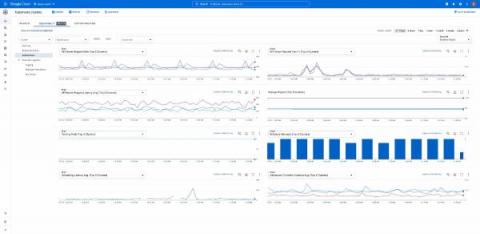
Introducing Kubernetes control plane metrics in GKE

An essential aspect of operating any application is the ability to observe the health and performance of that application and of the underlying infrastructure to quickly resolve issues as they arise. Google Kubernetes Engine (GKE) already provides audit logs, operational logs, and metrics along with out-of-the-box dashboards and automatic error reporting to facilitate running reliable applications at scale.

New Puppet Enterprise LTS release increases security and compliance

We’re pleased to introduce updates to Puppet Enterprise that give infrastructure operations teams the insights they need to manage and protect infrastructure and complex workflows in a simple yet powerful way. With Puppet Enterprise 2021.7, teams gain automatic access control and a host of system insights related to runs and events.

Akka License Change: The Impact of Akka's Move Away From "Open Source"

Akka’s license change has surprised many of us, but it didn’t come out of nowhere. Lightbend recently announced that Akka will be transitioning from an “Open Source” license to a “Source available” license called BSL 1.1. Let’s unpack this to understand what it all means.

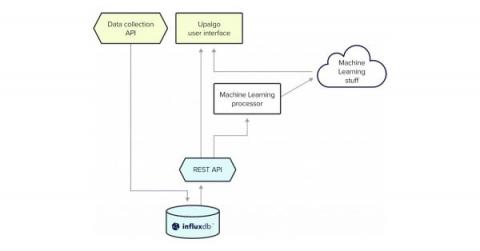
Automate Anomaly Detection for Time Series Data

This article was originally published in The New Stack and is reposted here with permission. Hundreds of billions of sensors produce vast amounts of time series data every day. The sheer volume of data that companies collect makes it challenging to analyze and glean insights. Machine learning drastically accelerates time series data analysis so that companies can understand and act on their time series data to drive significant innovation and improvements.

How to create your ChatOps bot

Communication within organizations has evolved from email threads to real-time chats. With the vast potential of real-time messaging, organizations are beginning to explore how they could make these chat applications do more. We now even have a name for this phenomenon — ChatOps. To get a taste of the power of ChatOps in action, let’s build a ChatOps bot that sits in a Mattermost channel with Errbot.