Operations | Monitoring | ITSM | DevOps | Cloud

Cortex Initiatives: When scorecards need a deadline

Improving software health, security, and operational maturity are continuous programs—you’re never really “done” maintaining standards of quality. But what if specific parts of that program feel more urgent? Maybe you want to ensure all software has a README file attached, and at least 1 reviewer assigned... by next month? Hey, you gotta start somewhere!

Unleashing the Dynamic Duo: Supercharging Productivity with Liquit Workspace and eG Innovations Monitoring Solution!

A guest blog from Donny van der Linde, Pre-Sales Consultant at eG Innovations’ partner Liquit covering how to leverage eG Enterprise’s monitoring in combination with Liquit Workspace technologies to build powerful proactive contextual access workflows to support automated application delivery. An example using eG Enterprise’s user experience metrics to trigger remediation via Liquit Smart Icons is given.

How Grafana Labs switched to Karpenter to reduce costs and complexities in Amazon EKS

At Grafana Labs we meet our users where they are. We run our services in every major cloud provider, so they can have what they need, where they need it. But of course, different providers offer different services — and different challenges. When we first landed on AWS in 2022 and began using Amazon Elastic Kubernetes Service (Amazon EKS), we went with Cluster Autoscaler (CA) as our autoscaling tool of choice.

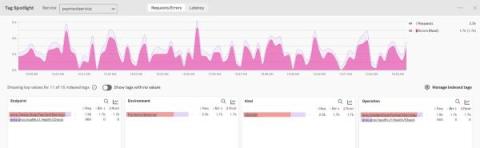
How to Use Tags to Speed Up Troubleshooting

Maybe as a kid, you pretended to have a magic wand. You would say something like, “Show me the answer to this long division question” then wave your magic wand and wait for the answer. Sadly, mine never seemed to work – for math questions or to make magical snacks appear. Now, imagine if you had a magic wand for your application stack where you could ask it a question about your data and it would give you immediate insights.

The Importance of Microservices

What are microservices? Microservices are a software approach that creates applications as a loose coupling of specific services or functions, rather than as a single, “monolithic” program. A microservice architecture increases the speed and reliability with which large, complex applications are delivered. What makes a service a microservice? Microservices are defined not by how they’re coded, but by how they fit into a broader system or solution.

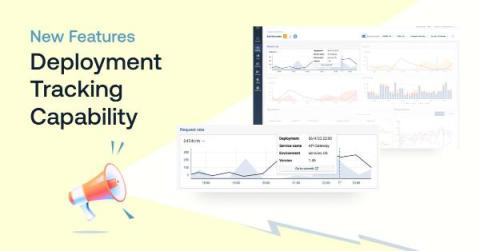
Enrich Kubernetes with New Deployment Tracking Capability

When things go wrong, we’d all love the ability to go back in time, return things to the way they were, and fix whatever issues pop up at the start so they never happen in the first place. This is no different when maintaining complex microservices-based architectures. With any complex system, things are bound to go wrong from time to time.

Cycle vs. Kubernetes: Why I See Organizations Making the Switch

Greetings! My name is Matt Krauser and I’m a Strategic Sales Executive here at Cycle. After participating in nearly a hundred demos of the platform, I wanted to step back from my day to day grind and share a little about my experience thus far. My goal in writing this is to compare Cycle and Kubernetes, discuss the primary pain points I hear from prospects and K8s users on a daily basis, and explain how Cycle can alleviate these challenges.

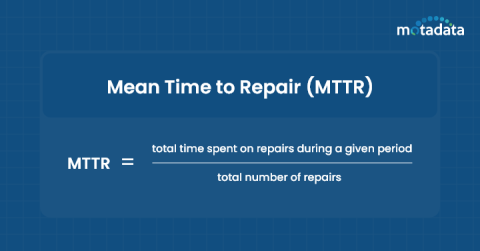
How to Reduce MTTR: A Complete Guide

Organizations striving to improve their operational efficiencies must know how to reduce MTTR as it plays a key role in today’s fiercely competitive business landscape. Customer satisfaction is a top priority for most businesses and late response to their queries or issues can have a negative impact. To track the response and resolution time, businesses measure their MTTR score. MTTR is a key metric that gives insight as to how much time an organization takes to resolve an incident or issue.