Downsampling & Aggregating Metrics in Prometheus: Practical Strategies to Manage Cardinality and Query Performance
A comprehensive guide to downsampling metrics data in Prometheus with alternate robust solutions.


Sometimes, when building Runbooks in Orchestrator, it can feel like you’ve hit a dead end with no way to achieve the functionality or automation you require. For newer users, Orchestrator can be daunting because it is a completely blank canvas; there are no sample runbooks included or out-of-the-box automations. In addition, with a shift in focus to cloud automation, there is limited guidance and ‘how to’ advice available to help users.
Welcome to the first Signals Captain’s Log! My name is Robert, and I’m a recovering on-call engineer and the CEO of FireHydrant. When we started our journey of building Signals, a viable replacement for PagerDuty, OpsGenie, etc, we decided very early that we would tell everyone what makes Signals unique, and what better way than to tell you how we’re building it (without revealing too much 😉). Let’s jump in.
Banks are putting a fresh set of eyes on how they are using APIs to drive better business outcomes and deliver more value to their customers. This is a relatively new departure toward adopting digital transformation of key operations. Financial organizations are traditionally known for favoring conservative business models that often resist modernizing complex legacy systems or rapid change in product and service offerings. This has been changing rapidly as APIs become more prevalent.
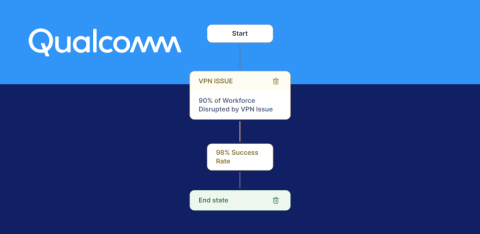
VPN issues are easily some of the most common digital workplace problems to plague end user computing (EUC) teams. When the VPN crashes or falls out of compliance, it can have a disproportionate impact on employee experience. Monitoring and managing VPN performance is a top priority for many of our customers – including Qualcomm Incorporated. Qualcomm had a known VPN issue taking place in their environment impacting 90% of their workforce.
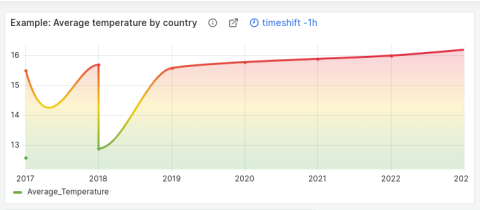
As Grafana evolved over the years, so did our panel headers. In our quest for improvement, we continually added design options that created more comprehensive panels, but also an increasingly complex interface. It was a process of continual adaptation without a roadmap — which, though well-intentioned, began to result in unforeseen challenges.
Docker is a platform as a service for deploying applications in Docker containers. Containers are software "packages" that bundle together an application's source code with its libraries, configurations, and dependencies, helping software run more consistently and reliably on different machines. To start using Docker containers, you need to be familiar with Docker networking. Below, we'll answer the question: "What is a Docker network host?".
When it comes to creating automated process workflows, there is no shortage of tools on the market. StartingPoint is a great example of a workflow automation platform that makes it easy for even the most non-technical users to create automated process workflows in just a few simple clicks. The real magic happens when you define a sequence of tasks for the tool to follow, achieving a specific goal with machine-like efficiency and precision.