Operations | Monitoring | ITSM | DevOps | Cloud

Dependency Redundancy Groups in Icinga 2.14

Icinga 2.14 introduced a new feature that allows to better model complex dependencies between your hosts and services: redundancy groups. Let’s take an e-mail server as an example. In order to deliver outgoing messages, it has to look up the addresses of the destination servers and relies on DNS for doing so. For incoming messages, it has to know which accounts exist and in a corporate environment, this typically means looking up user accounts in a directory service like LDAP.


SmartNICs in telco: benefits and use cases

In our previous blog, we introduced smartNICs as technology enablers for next-generation converged data centres. We covered how smartNICs can increase efficiency and drive return on investment. In this blog post, we explain how this innovative technology can help the telecom industry. SmartNICs use cases for the telecom sector are still emerging. However, when they arrive, it will be big for the sector, especially at edge clouds where speed in user plane packet processing matters the most.

Send Lambda traces to Grafana Cloud with OpenTelemetry

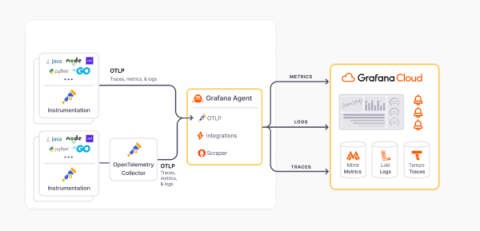
AWS’s serverless technologies are popular because they provide cost effective scaling and great separation of concerns. However, observing serverless architectures like Lambda is challenging due to their transient nature and abstracted infrastructure. Unlike traditional systems with consistent hosts, serverless functions are ephemeral, often scaling rapidly and operating in isolation.

5 Tips For Managing Your Internal Developer Platform

Internal Developer Platforms (IDPs) have become the cornerstone of efficient development, serving as the central hub where development teams access the tools and resources necessary for coding, testing, deploying, and maintaining software applications. As software development continues to evolve rapidly, IDPs are crucial in maintaining a competitive edge. This introduction sets the stage for the technical insights that will follow, sharing 5 tips for effective Internal Developer Platform management.

Aggregation mapping pattern in BizTalk to Azure Integration Services migration

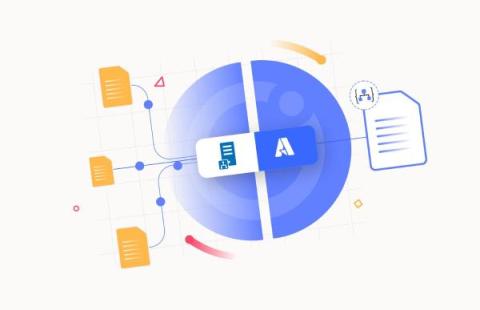
Let’s embark on a new journey as we begin a series of blog posts dedicated to the migration of BizTalk Server to Azure Integration Services. I’d like to highlight that when I mention the migration to Azure Integration Services (AIS), I’m making a clear distinction from Logic Apps. This differentiation is important because, contrary to what some consultants and salespeople may suggest, migrating BizTalk Server entirely to Logic Apps is not a viable path!

Are there any alternatives to OpenTelemetry worth considering?

Are you looking for an OpenTelemetry alternative? Then you've come to the right place. There are no good alternatives to OpenTelemetry if your use case involves generating different types of telemetry signals like logs, metrics, and traces and their collection. In certain use cases, like monitoring only metrics or time-series data, you can use a tool like Prometheus. If you’re sure you want an OpenTelemetry alternative, then let me point you to these three here.

Elasticsearch and Arduino: Better together!

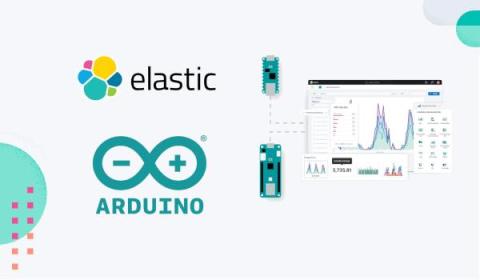
An easy way to communicate with Elasticsearch and Elastic Cloud using Arduino IoT devices At Elastic®, we are constantly looking for new ways to simplify search experience, and we started to look at the IoT world. The collection of data coming from IoT can be quite challenging, especially when we have thousands of devices. Elasticsearch® can be very useful to collect, explore, visualize, and discover data — for all the data coming from multiple devices.

Container Orchestration: A Beginner's Guide

Container orchestration is the process of managing containers using automation. It allows organizations to automatically deploy, manage, scale and network containers and hosts, freeing engineers from having to complete these processes manually. As software development has evolved from monolithic applications, containers have become the choice for developing new applications and migrating old ones.

CapEx vs OpEx for Cloud, IT Spending, & More

Capital expenditures (CapEx) and operational expenditures (OpEx) are two ways organizations categorize their business expenses. Every organization has a variety of expenses, from office rent to IT infrastructure costs to wages for their employees. To simplify accounting, they organize these costs into different categories, two of the most common being CapEx and OpEx.