Operations | Monitoring | ITSM | DevOps | Cloud

HoneyByte: Using Application Metrics With Prometheus Clients

Have you ever deep dived into the sea of your tracing data, but wanted additional context around your underlying system? For instance, it may be easy to see when/where certain users are experiencing latency, but what if you needed to know what garbage collection is mucking up the place or which allocated memory is taking a beating? Imagine having a complete visual on how an application is performing when you need it, without having to manually dig through logs and multiple UI screens.

What's New with DX Unified Infrastructure Management 20.4

DX Unified Infrastructure Management (DX UIM) enables comprehensive infrastructure observability. The solution delivers comprehensive coverage, modern administrative and operator consoles, zero-touch configuration, advanced alarm management, and more. This solution provides a unified, data-driven approach to infrastructure management. With the solution, your teams can proactively and efficiently manage all your digital ecosystems, including private and public clouds.

Enabling the Self Driving Cloud with Splunk Observability Cloud and GKE Autopilot

In 2021, any time that you access any kind of web service, whether it be via a website or app, chances are high that the backend is running on Kubernetes. Hundreds of thousands of organizations rely on Kubernetes to power and manage their mission critical services every day, and the reliability and scalability benefits offered by Kubernetes have been felt across the industry.

How Customer Data Models for B2B2C improve customer service

Sharath Lagisetty, senior principal product manager for Customer Workflows at ServiceNow, co-authored this blog. As companies engage with different customers and partners via digital channels, it’s critical to establish a rich understanding of each entity and their relationships, both to the company and to each other. The latest release of ServiceNow® Customer Service Management extends Customer Data Models to support multilevel relationships.

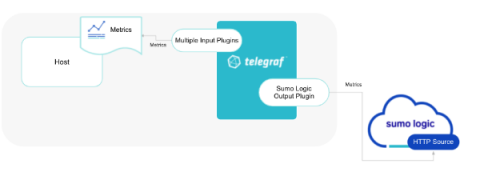
Host and process metrics - monitoring beyond apps

Consumers and users of applications expect near 100% availability and reliability to work, transact, collaborate, etc. There’s a lot of talk about monitoring the performance of the application itself, but what about the underlying systems and components supporting the app, and in particular the infrastructure it sits on? If any piece of this stack fails, it can negatively impact the user experience, and in turn, your business.

Data Pipelines Overview

A Data Pipeline is a series of processes that collects raw data from various sources, filters the disqualified data, transforms them into the appropriate format, moves them to the places you want to store them, analyzes them, and finally presents them to your audience. As we can see in the chart above, a data pipeline is analogous to a water flow: data flows from one stage to another while being processed and reshaped.

Bare metal Kubernetes: The 6 things you wish you knew before 2022

2022 is right around the corner, and it’s not just time to prepare for christmas, play video games, buy presents, or share anti-christmas memes. It’s time to start making some predictions for bare metal Kubernetes! Take a minute and let’s think about it. Developers have advent of code so they’re busy right now. Sysadmins and devops can play games like predicting what’s going to happen next year for bare metal Kubernetes.

DevOps State of Mind Podcast Episode 5: Steve Pereira and the four key maps of DevOps

Liesse Jones: Steve Pereira is a DevOps enthusiast and an expert in software team performance. He leads the largest DevOps community in Canada and is the founder of Visible, where he coaches teams to boost flow and value using his four key maps of DevOps. Welcome to DevOps State of Mind, a podcast where we dive deep into the DevOps culture and chat with friends from small startups and large enterprises about what DevOps looks like in their organizations. I'm Liesse from LogDNA.

Featured Post

Follow the engineer: what DevOps teams can teach businesses about agility and efficiency

The pandemic threw out the rulebook on work. And we're still slowly writing a new one. Over the past year and a half, companies have been forced to rethink their processes to accommodate lockdown restrictions and the seismic shift in work they triggered. Remote working rendered old systems obsolete and companies are figuring out how to adapt them.