This is a short blog post about a pattern that we’ve observed more frequently among some of the large enterprises: the use of AWS S3 as both an observability lake and a data bus. AWS S3’s simple API, ubiquitous language support, unmatched reliability and durability, retention options, and numerous pricing plans have made it the de facto standard for storing massive amounts of data.
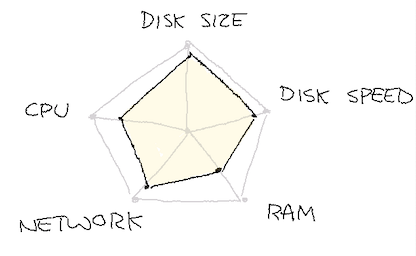
In this post, we’ll walk through our journey of launching Cribl LogStream Cloud on AWS Graviton instances. In order to put our journey into perspective, it is worth spending a few moments to describe the product and its resource requirements.
Since early 2020, there has been a massive growth in the number of active Microsoft Teams users and organizations deploying Teams; now, there are more than 200 million monthly active users across the globe. With an increase in market share, it’s one of those applications that you either expect an organization to be already using or planning to deploy out to their environment sooner rather than later.
Having an open, safe and efficient digital administration is the new objective of every Government these years. Although the recent pandemic may have hampered any master plan for system evolution and optimization, there is still some hope. The hybrid Cloud reaches the public sector, among other advances. We’ll tell you all about it in our blog!
When you send telemetry into Honeycomb, our infrastructure needs to buffer your data before processing it in our “retriever” columnar storage database. For the entirety of Honeycomb’s existence, we have used Apache Kafka to perform this buffering function in our observability pipeline.
The cloud is today one of the most expensive resources for any modern organization, second only to employee salaries and overhead. According to recent research by Gartner, end-user spending on public cloud services will reach $396 billion in 2021 and grow 21.7% to reach $482 billion in 2022. By 2026, Gartner predicts public cloud spending will exceed 45% of all enterprise IT spending, up from less than 17% in 2021.
SaaS is exploding and so it should; it takes commoditized work and infrastructure away from tech teams so that they can focus on differentiating features. But what happens when it goes wrong? How do SaaS platforms make sure they aren't letting their customers down and in turn, letting their customers down? Observability, bolstered with AI gives all the partners the best chance to optimize availability and customer experience. Here's how.
As Kubernetes becomes the key target environment across many organizations, it automatically becomes an essential topic for developers. However, Kubernetes was created for operations and, unless you spend a considerable amount of time learning and specializing yourself, it is still challenging to use. Developers should rather focus on delivering applications instead, and a developer or application-focused platform is needed to enable that.