Operations | Monitoring | ITSM | DevOps | Cloud

ITOM vs ITSM

Is it important to your customer to understand the distinction between IT Operations Management (ITOM) and IT Service Management (ITSM)? Most likely not. Your customers are only concerned with how quickly you solve their problems. It makes no difference to them which application or infrastructure you use. So why should you, as an organization, be concerned about the meaning of these concepts, how they align, how they differ, and why they matter?
Exposing More Public Endpoints for Sending Metrics and Errors to AppSignal

Today, we launch a new feature: sending metrics and errors to AppSignal over our “Public Endpoint” API. AppSignal has many web frameworks, databases and background job frameworks automatically instrumented when you want to monitor a Node.js, Ruby or Elixir app. If you have code running on serverless architecture such as AWS Lambda, you can’t run our agent, so our standard integration with all of the out-of-the-box magic won’t work.

Not knowing real time asset intelligence is a non starter

Complexity breaks correlation. Intelligence brings cohesion. This simple principle is what makes real-time asset intelligence a must-have for AIOps that is meant to diffuse complexity. To further create a context for the user, it is critical to understand service dependencies and correlate alerts across the stack to resolve incidents. CMDB systems have been useful to break down configuration items into logical layers. But, that’s not enough because they can become outdated very soon.

How to configure services in Squadcast: Best practices to reduce MTTR

With a rise in digital platforms, IT infrastructure has grown exponentially complex to a level where multiple application interdependencies coexist with varied architecture & oncall team types. This blog looks at how you can model your infrastructure in Squadcast to reduce your time to respond & resolve incidents.

Comparing Real User Monitoring and Synthetic Transactions

Written by Nick Cavalancia, Microsoft Cloud & Datacenter MVP The need for visibility into service availability and delivery quality has led to the rise in interest in monitoring Microsoft’s Office 365 services from the user perspective. With two different approaches available, what value do they each bring?

How to Improve Core Web Vital Scores

From May 2021, Google is using ‘Core Web Vitals’ as a brand new ranking signal. Google states that business owners should monitor and improve their scores to avoid damaging their organic SEO. In this blog, we will explain how to improve Core Web Vitals scores. To discover the specific issues affecting your users’ experience, we strongly advise having a Core Web Vitals audit.

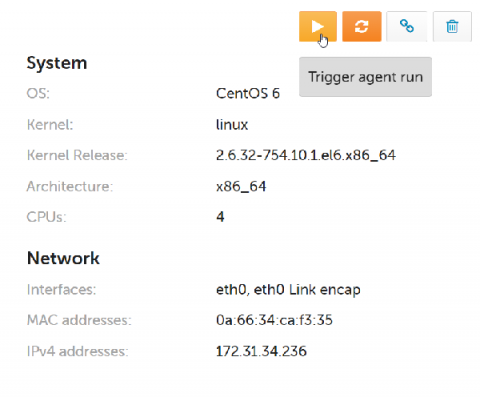
Feature preview: Trigger agent runs and report collection from Mission Portal

If you are debugging issues with a host, it is quite common to want to make changes to CFEngine policy, and speed up the process of fetching, evaluating and reporting for that host. You can do this by running cf-runagent and cf-hub from the command line, now we’ve brought this functionality into Mission Portal.

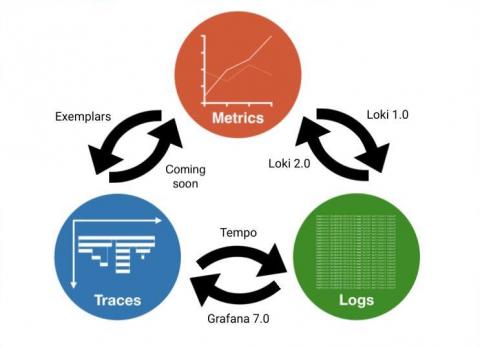
Intro to exemplars, which enable Grafana Tempo's distributed tracing at massive scale

Exemplars are a hot topic in observability recently, and for good reason. Similarly to how Prometheus disrupted the cost structure of storing metrics at scale beginning in 2012 and for real in 2015, and how Grafana Loki disrupted the cost structure of storing logs at scale in 2018, exemplars are doing the same to traces. To understand why, let’s look at both the history of observability in the cloud native ecosystem, and what optimizations exemplars enable.

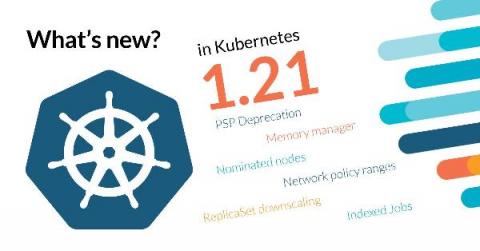
What's new in Kubernetes 1.21?

This release brings 50 enhancements, up from 43 in Kubernetes 1.20 and 34 in Kubernetes 1.19. Of those 50 enhancements, 15 are graduating to Stable, 14 are existing features that keep improving, and a whopping 19 are completely new. It’s great to see old features, that have been around as long as 1.4, finally become GA. For example CronJob, PodDisruptionBudget, and sysctl support.

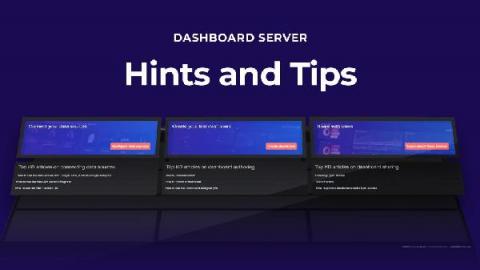
Getting started with Dashboard Server

SquaredUp Dashboard Server lets you and your team create beautiful dashboards, for any tool or data, that you can share with everyone in your organization. Here’s a quick introduction to the product where we show you exactly what you can achieve, in no time at all. Let’s start with the three tabs on the top left of the screen: Getting Started, Next Steps, and Sample Dashboards. We’ll run through them one by one.