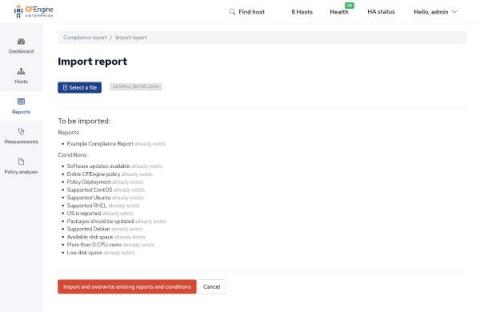
Everyone wants to automate security. Traditionally, though, doing so has been challenging because setting up security automation tools required a specialized set of skills that no one engineer at a company possesses. It’s time to change this state of affairs by democratizing security automation. Here’s why and how.
As managed services provider (MSP) technicians know, remote access gives an authorized user the ability to enter another user’s computer or network through a network connection. This access is often established via a remote desktop protocol (RDP), which is a network communications protocol from Microsoft® that is specifically designed for remote management.
Many companies are continuously modernizing their infrastructure – but there is no standard way for the perfect IT infrastructure. Still, hybrid architectures have become the status quo in enterprises. Almost all organizations have migrated at least parts of their assets to the cloud or run applications as cloud services. At the same time, businesses want to dovetail their IT architecture with software development and are therefore embracing dynamic infrastructures.
Virtual machines (VMs) have transformed infrastructure deployment and management. VMs are so ubiquitous that I can’t think of a single instance where I deployed production code to a bare metal server in my many years as a professional software engineer. VMs provide secure, isolated environments hosting your choice of operating system while sharing the resources of the underlying server. This allows resources to be allocated more efficiently, reducing the cost of over-provisioned hardware.
We're excited to announce Civo Academy: A full Kubernetes learning program consisting of over 50 videos created in-house by the team here at Civo.