Operations | Monitoring | ITSM | DevOps | Cloud

Getting Started with Google Cloud Managed Service for Prometheus

As you scale your services in production, you also need to scale your monitoring. Managing Prometheus at scale to handle increasingly large metric volumes can be a huge operational challenge, but Google Cloud Managed Service for Prometheus is here to help. We’re excited to introduce Google Cloud Managed Service for Prometheus and help you scale by removing operational toil!
Track Errors in Your NestJS Application with AppSignal

Many variables — such as your users' device type and configuration, external hosting services, and third-party libraries — can impact an application's performance. Without a performance monitoring system in place, numerous problems can arise. These issues could even mean that users stop using your application.

Strategies for Kubernetes Cluster Administrators: Understanding Pod Scheduling

Kubernetes has revolutionized container orchestration, allowing developers to deploy and manage applications at scale. However, as the complexity of a Kubernetes cluster grows, managing resources such as CPU and memory becomes more challenging. Efficient pod scheduling is critical to ensure optimal resource utilization and enable a stable and responsive environment for applications to run in.

Understanding Log4Shell: An Ultimate Guide to Protecting your System

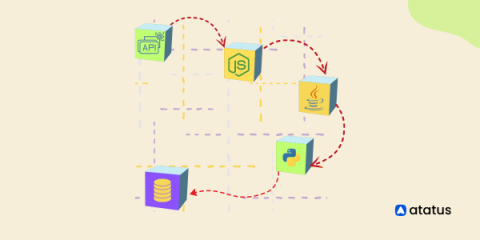
Coding is a big part of building an application. But, most of the time, you don’t write the entire code. Yes, you don't! Some people, usually big companies, provide pre-written codes for certain standard functions - like loggers, APIs, etc. This is because these functions work the same way in most applications; they require only simple fine-tuning to be adapted for your program as well. In such a case, writing it all from scratch would be a waste. And that is why developers use libraries.

SolarWinds Day Recap: What You May Have Missed

Our second SolarWinds Day was another success! For our second SolarWinds Day, we focused on our customers. We shared exciting new product updates, new tool releases, and some helpful tips for navigating 2023. Let’s dive into our recap, and make sure to check out the end of the post for a quick FAQ of questions asked by those in attendance. First of all, if you missed the event or want to revisit any sections, you can watch the full event on-demand here.

RDCMan: How to Manage Multiple Remote Connections in Microsoft

Having to switch between multiple desktop client windows to access them remotely is highly time-consuming and leads to a cluttered desktop. But you can simply ditch the frustration by using RDCMan for your RDP connections. In this article, we'll explore what it is, how you can use it, and the differences between mRemoteNG and RDCMan. We'll also discuss alternatives to this tool. So, let's dive in and learn how to use Microsoft's RDCMan to manage your remote connections like a pro!

Linux security: your questions, answered

At Canonical, we often get questions about open-source security and of course, Linux security is a common topic. Based on a recent webinar hosted by our security team and an accompanying blog post, we put together the most common questions we receive. This is by no means an exhaustive list, but it should give you a general idea about Ubuntu’s approach to security vulnerability management, livepatch, IoT, and its compliance and hardening tools.

Monitor User Behavior to Detect Insider Threats

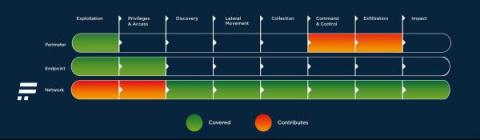
The risk from insider threats has grown massively, with perpetrators frequently getting around organizations' increasingly complex perimeter protections. It is one of the most common ways customer data or industrial and trade secrets leak. This very complex topic includes many types of threats and techniques. Let's discuss how you could detect insider threat activity at a network level.