This week Google unveiled a number of exciting announcements at its annual developers’ conference, Google I/O 2021. Announcements included Android 12 and several security and privacy features that are coming to its platforms. At Ivanti, we are particularly excited about what Google is doing to improve user security and privacy. The consistent theme of Google I/O was Secure by default, Private by design, and You’re in control.
There are some marketing campaigns that just work. They resonate with their audience, they add value, they’re interesting and topical – but they’re also rare. In 2020, the MobileIron (now Ivanti) communications team launched a new campaign to tell the story of the Everywhere Enterprise (a precursor to Ivanti’s Everywhere Workplace).
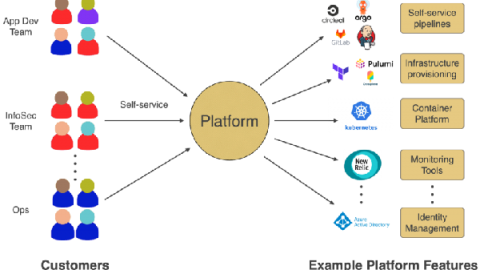
Network Policy is a critical part of building a robust developer platform, but the learning curve to address complex real-world policies is not tiny. It is painful to get the YAML syntax right. There are many subtleties in the behavior of the network policy specification (e.g., default allow/deny, wildcarding, rules combination, etc.). Even an experienced Kubernetes YAML-wrangler can still easily tie their brain in knots working through an advanced network policy use case.
In this post we’ll explore the concepts of data lake, data hub and data lab. There are many opinions and interpretations of these concepts, and they are broadly comparable. In fact, many might say they’re synonymous and we’re just splitting hairs. But let’s look again carefully. We can discern some subtle trends in the way people are doing things, and find distinctions in these expressions.
This article will show how we kept cardinality under control with a few tweaks in the Telegraf configuration. If you’re not yet familiar with it, Telegraf is the native and open-source plugin-driver metrics collection agent of InfluxDB. As you may know, cardinality is the combination of measurements, tags, sets, fields, and values in a time-series database, and having high cardinality can be a challenge.