2020 revolutionized how we work. Many went from full-time office work to 100% remote overnight. And now that in-office is once again on the horizon, companies are thinking of ways to continue to work flexibly. However, this comes with increased challenges, and a need for tools that match this working style. The PagerDuty mobile application is well recognized, with a 4.8 stars rating on the App Store and Google Play.
With the launch of the Cycle Partner Program, we are committing to making it easier for companies to work with Cycle by creating more transparent and predictable relationships, offering training, resources, incentives, and benefits, some of which will roll out over time as the program evolves. Interested in partnering with Cycle? Contact our partner lead to schedule a meeting.
In many critical areas, you can automate the completion of repetitive chores in an efficient and effective manner by using a computer language such as Python. When you are just starting out, it’s vital to understand the fundamentals of Python via coding examples. However, if you want to improve your Python skills, you should concentrate on constructing things and automating real-world tasks.
Anomaly detection can be defined by data points or events that deviate away from its normal behavior. If you think of this in the context of time-series continuous datasets, the normal or expected value is going to be the baseline, and the limits around it represent the tolerance associated with the variance. If a new value deviates above or below these limits, then that data point can be considered anomalous.
Network performance monitoring (NPM) and application performance monitoring (APM) are both key pillars of an overall performance and reliability management strategy, especially when dealing with complex, distributed infrastructure across cloud-native environments. NPM and APM also complement each other, in the sense that NPM can serve as an additional source of truth and observability for application performance.
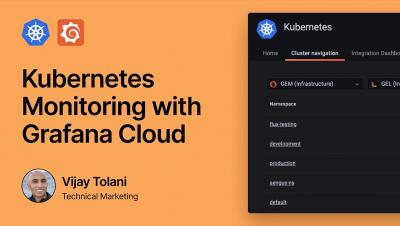
According to recent surveys and reports on the industry, Kubernetes and containers are more popular than ever. Containers and serverless functions are being mainstream and ubiquitous – with a more than 300% increase in container production usage in the past 5 years. This trend is especially true for large organizations, which are often using managed platforms and services.