Learn how to set up TCP checks using Grafana Cloud Synthetic Monitoring. In this video, we walk through how to create a TCP check and analyze test results.
What if a broken arm didn't break your workflow? Follow Alice as she faces tough circumstances, but still gets the job done. Nursing a broken arm in a sling, she uses built-in accessibility features like Voice Input for Now Assist to set up the ServiceNow AI Platform for a new client—hands-free. This is how we turn accessibility into opportunity—building forward-lthinking features that solve real problems and work better for everyone.
Early detection matters. When a problem occurs, you want to know immediately, not after the damage is done. Monitoring isn’t just about visibility; it’s about precision, speed, and proximity to the problem. Just like smoke detectors, you need to monitor in the right places: close to your critical infrastructure, applications, and end users. The sooner you detect issues, the cheaper and easier they are to fix. And that’s where real resilience begins.
Join SAP CX's Martin Norato Auer, VP of Observability, and Catchpoint’s Nick Homan as we explore SAP CX’s journey from fragmented alert management to a scalable, standardized observability model. In this candid fireside chat, Martin shares how his team overcame alert fatigue, integrated observability with automation and BI, and scaled their practices across multiple SAP CX products with APM & Internet Performance Monitoring (IPM).
Rob Zuber's pinky ring isn't jewelry—it's a daily reminder of engineering's power and responsibility. Representing the steel of a collapsed bridge that claimed lives due to engineering failure, this Canadian tradition keeps him grounded in the weight of his work and the potential impact of every line of code.
Let's be honest - observability can suck. Ever feel like you're swimming in dashboard soup? You know the feeling: tons of single-use dashboards, building new ones during every incident only to lose them in the chaos, and spending ages creating visualizations that no one ever looks at again. Even with all the right tools, something still feels off.
Modern data centers generate enormous volumes of telemetry from servers, switches, cooling systems, power infrastructure, and environmental sensors. Operations engineers must capture, store, and analyze this data in real-time to monitor uptime, maintain energy efficiency, and perform predictive maintenance using AI. Legacy monitoring systems struggle to meet today’s volume, cardinality, and latency demands.
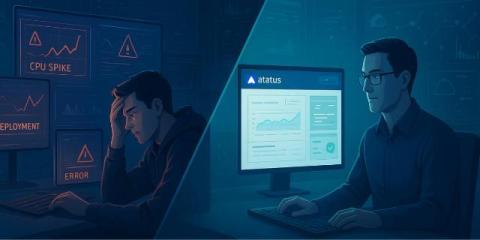
It’s 2 AM. Your phone buzzes. A critical server’s CPU is maxing out again. But this time, the issue isn’t just high usage. It’s heat. As a network admin, you’re trained to monitor traffic patterns, patch vulnerabilities, and respond to performance slowdowns. But high CPU temperature? That’s the silent system killer many still underestimate. Without a proactive plan, it can knock out performance, rack up hardware costs, and shorten the lifespan of your infrastructure.
You write code. Open a PR. CI runs. PR merges. Prod’s on fire by 5pm. Maybe you skipped writing some tests. (It's tedious, sometimes unclear, and easy to ignore when you're racing to ship—until something breaks and you realize a test could’ve saved your Friday night.) Maybe the PR review was more of a drive-by from a teammate who barely had time to skim the diff. But reviews and tests matter.