Operations | Monitoring | ITSM | DevOps | Cloud

Combining APM and RUM to Improve Your User Experience

Providing an intuitive user experience that caters to your audience’s needs is essential for your business. By combining APM and RUM, you can help eliminate application issues and give your users a seamless experience. Combining APM and RUM helps you look at both the front-end and back-end of your application, find and fix issues. Don’t quite know what APM and RUM are? Let’s take a closer look.


Software supply chain security: How to audit a security bill of material (SBOM)

A security bill of material (SBOM) is an inventory of the entire building components of a software application. These components include open source libraries, dependencies, commercial components, licenses, patch status, version information, upgrades available, CVEs, etc. Having an SBOM of a codebase or piece of software provides deep visibility into core components that help quickly identify and mitigate the security and licensing risks associated with the software supply chain.

Trust Me - I'm a SASE Solution

As we get ready to wish the term SASE a happy 4th birthday, it seems odd that there is still a great deal of confusion in the market about what SASE really is and how it relates to a ‘Zero Trust’ architecture. For many, SASE is a framework for secure network design; for others, it’s seen more as an architectural approach to delivering Zero Trust. So why do we have this confusion when Gartner defined SASE back in 2019?

Why You Should Rely More on Your IT Self-Service Portal

No matter what roles we play, we’ve all been frustrated end users at some time or another. Sometimes it’s as simple as struggling to find the documentation we need, whereas other times, we’re sitting there doing nothing because we forgot our passwords and must wait for an administrator to reset them.

AIOps Essentials: What is AIOps? | AIOps Use Cases with Elastic Observability (1/5)

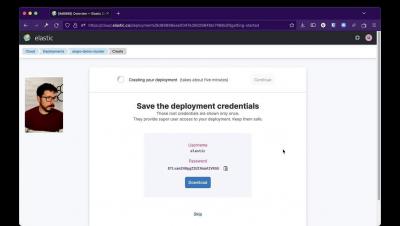
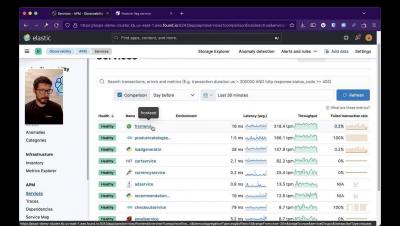
Artificial intelligence for IT operations (AIOps) is a way to automate tasks that are typically carried out by site reliability engineers (SREs). It aims to make the lives of SREs easier by helping them reduce the amount of noise coming from systems, surface issues more easily, and perform root cause analysis by correlating data from different systems. AIOps can also automate actions based on identified problems using machine learning. In this video series, we demonstrate how to use Elastic to implement AIOps.

AIOps Essentials: How to Reduce Noise in Ingested Telemetry on Elastic | AIOps Use Cases (2/5)

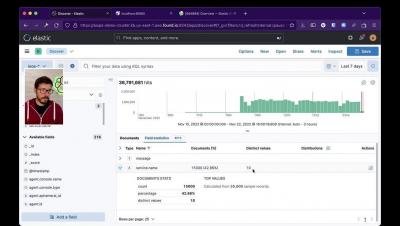
Artificial intelligence for IT operations (AIOps) is a way to automate tasks that are typically carried out by site reliability engineers (SREs). It aims to make the lives of SREs easier by helping them reduce the amount of noise coming from systems, surface issues more easily, and perform root cause analysis by correlating data from different systems.

AIOps Essentials: Issue Detection using Anomaly Detection on top of APM | AIOps Use Cases (3/5)

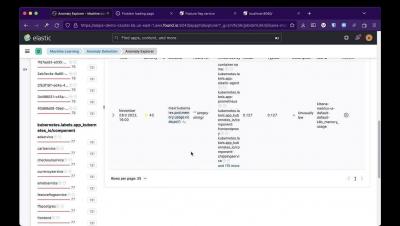
Artificial intelligence for IT operations (AIOps) is a way to automate tasks that are typically carried out by site reliability engineers (SREs). It aims to make the lives of SREs easier by helping them reduce the amount of noise coming from systems, surface issues more easily, and perform root cause analysis by correlating data from different systems

AIOps Essentials: How to use Distributed Tracing for Root Cause Analysis | AIOps Use Cases (4/5)

Artificial intelligence for IT operations (AIOps) is a way to automate tasks that are typically carried out by site reliability engineers (SREs). It aims to make the lives of SREs easier by helping them reduce the amount of noise coming from systems, surface issues more easily, and perform root cause analysis by correlating data from different systems.

AIOps Essentials: Automating actions from AIOps analysis | AIOps Use Cases (5/5)

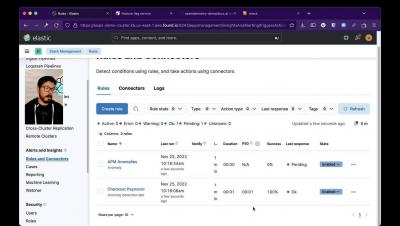
Artificial intelligence for IT operations (AIOps) is a way to automate tasks that are typically carried out by site reliability engineers (SREs). It aims to make the lives of SREs easier by helping them reduce the amount of noise coming from systems, surface issues more easily, and perform root cause analysis by correlating data from different systems.