What's new in Elastic Observability 7.8
Elastic Observability 7.8 includes new Google Cloud integrations, TLS / SSL certificate monitoring, and health indicators in APM service maps.


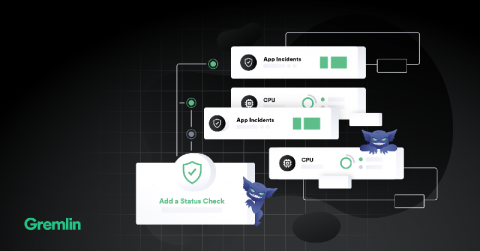
One of the most important aspects of any Chaos Engineering program is knowing that every experiment is being run safely. And one of the simplest ways to ensure safe experiments is by having safeguards that prevent running chaos experiments on a system that is unhealthy or has an incident in progress. Today, Gremlin is excited to announce Status Checks, which run before you kick off a Chaos Engineering Scenario in order to verify your system is in a steady state.
Building a healthy productive engineering culture is hard and just deploying frequently with continuous deployment is not enough. I'm going to show you how you can use a carrot, not a stick, approach to take continuous deployment to the next level by celebrating team values with Sleuth.
This Tip of the Day is the first in a three-part series on Domain Name System (DNS) monitoring. The Domain Name System is often described as “the phonebook of the Internet.” While humans access the Internet via domain names such as npr.org or bbc.com, web browsers interact via Internet Protocol (IP) addresses. DNS translates domain names to IP addresses so that browsers know which Internet resources to load.
The most successful software development movement of my lifetime is probably test-driven development or TDD. With TDD, requirements are turned into very specific test cases, then the code is improved so the tests pass. You know it, you probably use it; and this practice has helped our entire industry level up at code quality. But it’s time to take a step beyond TDD in order to write better software that actually runs well in production. That step is observability driven development.