Operations | Monitoring | ITSM | DevOps | Cloud

Accelerating Detection to Resolution: A Case Study in Internet Resilience

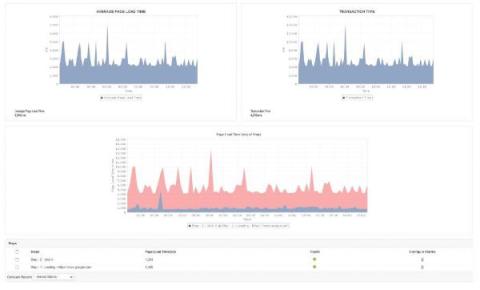
Today, any revenue-generating website is like a house of cards, poised to collapse with multiple points of failure. The modern service delivery chain relies on intricate multi-step transactions and third-party API integrations, making the system more complex and interconnected. A single point of failure in the architectural diagram above can lead to slowdowns and outages with tangible consequences on your bottom line.

Troubleshoot streaming data pipelines directly from APM with Datadog Data Streams Monitoring

When monitoring applications with streaming data pipelines, there are additional complexities to consider that are not present in traditional batch-processing systems. Whether you’re using streaming data pipelines to power a digital trading platform, capture sensor data from an IoT device, or recommend news articles to users, it can be challenging to identify the root cause of delays when you’re dealing with distributed systems, real-time data, and the dynamic nature of events.

How to manage Grafana instances within Kubernetes

If you’re using Grafana and Kubernetes, we’ve got exciting news — Grafana Labs will be maintaining and managing the Grafana Operator, the open source Kubernetes operator that helps you manage your Grafana instances within and outside of Kubernetes. This significant move not only elevates the Grafana Operator to an officially supported tool but also cements its place as a staple for managing Grafana as code, especially for users keen on adopting GitOps principles.

How to deal with API rate limits

When I first had the idea for this post, I wanted to provide a collection of actionable ways to handle errors caused by API rate limits in your applications. But as it turns out, it’s not that straightforward (is it ever?). API rate limiting is a minefield, and at the time of writing, there are no published standards in terms of how to build and consume APIs that implement rate limiting.

What Is Continuous Delivery and How Does It Work?

Continuous delivery (CD) is an application development practice that involves automatically preparing code changes for release to a production environment. Combined with continuous integration (CI), continuous delivery is a key aspect of modern software development. Together, these two practices are known as CI/CD. Properly implemented CI enables developers to deploy any code change to testing and production environments late in the software development lifecycle (SDLC).

Continuous Monitoring: A Definitive Guide

Continuous monitoring is the backbone of staying ahead in your business, maintaining a constant watch on your company’s activities. It adapts to the demanding needs of modern times, whether for compliance checks, continuous control, and infrastructure monitoring or defending against cyber threats. However, before the widespread adoption of continuous monitoring, companies relied on periodic audits, manual assessments, and sporadic checks to monitor their systems.