Operations | Monitoring | ITSM | DevOps | Cloud

Scheduling Tasks in PHP

In the scenario where you want to execute tasks repeatedly at a specific time and have full control over when they are executed and how the results are handled, it makes sense to build this into your application instead of setting up a cron job, for example. I’d like to give you a quick example of how you can achieve this in PHP using two great libraries, ReactPHP and cron-expression. ReactPHP is an event-driven programming library that has an event loop at its core.


Everything You Need to Know About SolarWinds Observability-Our Transformational Subscription Service

Transformation is key to being at the forefront of the tech industry, and over the past two years, I’ve been excited to lead an outstanding team of developers and engineers as we’ve embarked on evolving our monitoring tools toward observability. With this in mind, we’re excited to announce two significant product releases today. The first is a completely new product offering and subscription service we call SolarWinds® Observability.

It's Time to Rethink Observability and Rethink SolarWinds

Everyone in the information technology industry understands “change” is guaranteed. People are creative and constantly striving to find more efficient ways to solve problems and more innovative ways to deliver services to consumers. But keeping up with the constant cloud and internet technology shifts and taking advantage of all the new capabilities is a harrowing task for digital organizations.

Sysdig Cost Advisor: Optimize your Kubernetes Costs

Every company running its applications on the cloud needs to estimate its operating costs, but running workloads on Kubernetes clusters across multiple providers often makes it hard. Without Kubernetes context in the cloud billing reports, users aren’t able to group costs or effectively assign the resources to the proper cost center. To address these gaps in Kubernetes cost monitoring, we are excited to announce Cost Advisor, a new feature in Sysdig Monitor that will give you visibility into Kubernetes costs and automatically help you identify areas to reduce them.

SolarWinds Hybrid Cloud Observability - Evolving Beyond Monitoring

Learn more about SolarWinds® Hybrid Cloud Observability and how it can help organizations of all sizes and industries optimize performance, help ensure availability, and reduce remediation time across on-premises and multi-cloud environments by increasing visibility, intelligence, and productivity.

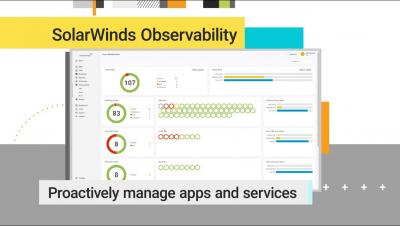
SolarWinds Observability - A Unified Full-Stack Solution for DevOps Teams

SolarWinds® Observability is a SaaS offering that unifies application, infrastructure, database, network, digital experience, and log analysis into a single, integrated platform. The solution is designed to grow and expand to accommodate whatever kind of environment you manage.

GitLens 13 - GitLens+ Features for All on Local & Public Repos

GitLens+ is now better than ever. When we initially released GitLens+ in early 2022, a free account was required for access to features like the Visual File History and Worktrees. Since, we’ve seen that additional step as a hurdle for you, our users, to explore and use these rich new capabilities. Which is why with GitLens 13, we are very excited to bring the power of GitLens+ features, including the beautiful new Commit Graph, to ALL users on local and public repos. No account required.

Find and Fix Bottlenecks in Your Gradle Builds With OpenTelemetry and Honeycomb

Today, I’d like to share with you a new community-contributed integration that helps you optimize and debug your Gradle builds. This new Gradle plugin is available today, is free to use, and you can use it immediately with a free Honeycomb account.

Intel Optimization Hub

Cloud Service Providers (CSPs) offer an ever-expanding array of instance types, ensuring that for any given workload there exists the perfect hosting option that matches the exact needs of that app or business service. But with this expansion comes an ever-increasing challenge to match the workloads to the offerings – there are many things to consider.