Mattermost Playbooks Roadmap Updates | v7.3
Take a look at everything new in version 7.3 of Mattermost for Playbooks.


Microservice architecture is an application system design pattern in which an entire business application is composed of individual functional scoped services, which can scale on demand. Each team focuses on an individual service and builds it according to their skillset or language of choice. In addition to flexibility, this pattern provides: These features have made microservices architecture a popular choice for enterprises.
Today, automation and configuration management tools are critical for operation teams in IT. Infrastructure as Code (IaC) is the way to go for both Kubernetes and more traditional infrastructure. IaC mixes the great capabilities of these tools with the excellent control and flexibility that git offers to developers.
Level 4, Proactive Observability With AIOps, is the most advanced level of observability. At this stage, artificial intelligence for IT operations (AIOps) is added to the mix. AIOps, in the context of monitoring and observability, is about applying AI and machine learning (ML) to sort through mountains of data looking for patterns.
Many renowned businesses use the well-known web framework Flask. Flask is quite famous among developers for making small and full-fledged applications. It is known for being a straightforward framework to learn hence why it is popular among established organizations. Monitoring your Flask application can be a challenge. Many important operations are happening inside of them, and if anything goes wrong, it can cause some damage.
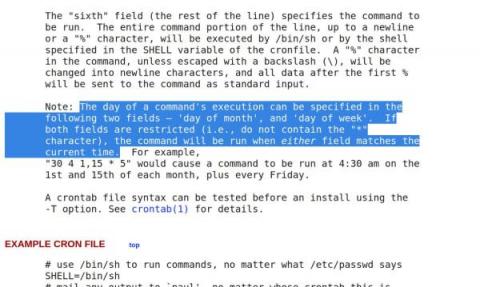
The crontab man page (“man 5 crontab” or read online) contains this bit: What does it mean precisely? If you specify both the day of month and the day of week field, then cron will run the command when either of the fields match. In other words, there’s a logical OR relationship between the two fields.