Kemp Flowmon Packet Investigator 11.1 - A new user experience
The Kemp Flowmon Packet Investigator 11.1 is easier to use and covers a broader scope of root-cause analysis scenarios.


The Kemp Flowmon Packet Investigator 11.1 is easier to use and covers a broader scope of root-cause analysis scenarios.
HAProxy generates over a hundred metrics to give you a nearly real-time view of the state of your load balancers and the services they proxy, but to get the most from this data, you need a way to visualize it. InfluxData’s InfluxDB suite of applications takes the many discrete data points that make up HAProxy metrics and turns them into time-series data, which is then collected and graphed, giving you insight into the workings of your systems and services.
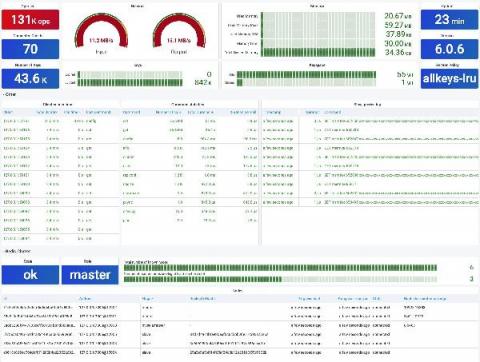
Mikhail Volkov is building observability and monitoring solutions at Volkov Labs and leading Redis plugins for Grafana. Since the Redis project first got underway in 2009, the open source in-memory data store has been embraced by thousands of companies of all types and sizes. According to Stackshare.io, well over 5,000 companies use Redis, including Uber, Airbnb, Twitter, Instagram, and Slack.
The CVE-2021-25737 low-level vulnerability has been found in Kubernetes kube-apiserver where an authorized user could redirect pod traffic to private networks on a Node. The kube-apiserver affected are: By exploiting the vulnerability, adversaries could be able to redirect pod traffic even though Kubernetes already prevents creation of Endpoint IPs in the localhost or link-local range.
Auto-instrumenting AWS Lambda Monitoring didn’t originate through a focus group or business plan. It started as a hackathon project that addressed the tedium of removing manual code instrumentation. Developer environments often include hundreds of AWS Lambda functions. And our existing instrumentation required initialization code to be manually placed on every single function.
In a single, monolithic repository, also known as a monorepo, you keep all your application and microservice code in the same source code repository (usually Git). Typically, teams split the code of various app components into subfolders and use Git workflow for new features or bug fixes. This approach is natural for most applications or systems developed using a monolithic architecture. Code in such a monorepo typically has a single build pipeline that produces the application executable.