Operations | Monitoring | ITSM | DevOps | Cloud

Cloud logging

There’s no tool that can replace the best practices for DevOps or SRE, but there is a tool that can allow you greater observability over your logs in a distributed infrastructure involving multiple products. In this episode of Google Cloud Platform Essentials, we show you how logs are aggregated for all Google Cloud products, how to utilize them, and how to use them for tracking application errors.

Announcing HAProxy Data Plane API 2.1

Version 2.1 of the HAProxy Data Plane API expands support to all available request and response actions, adds Lua actions, and improves file handling. A year ago, we introduced version 1.0 of the HAProxy Data Plane API, enabling you to configure your HAProxy load balancers remotely through a modern RESTful HTTP API. That first version of the API focused on the essential behaviors for creating frontend proxies, backend server pools, ACLs and traffic switching rules.

Using Non-Enterprise Gear in an Enterprise World

Different IT organizations have different needs. The one-man shop might find the best success with open-source software, while enterprises often need something a little more. But occasionally you’ll see an enterprise using open-source or something designed for a small to medium-sized business. This can be a good thing in certain instances, though it’s not without risks. So, why might you want to use SMB or open-source gear in an enterprise setting, and when might it be a good thing?

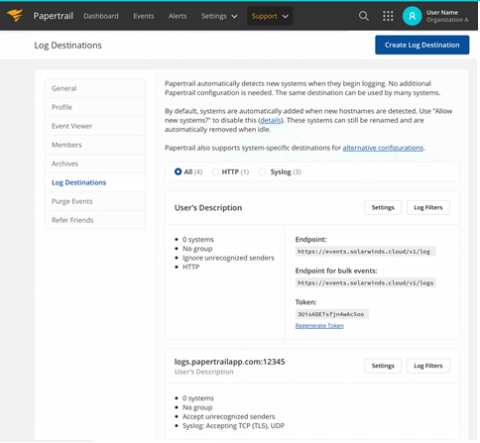
New support for HTTP connections

As all Papertrail fans know, sending logs to Papertrail using syslog is quick and easy. Generating and transmitting syslog packets usually involves just 2 – 4 lines of code, and you can see your logs flowing into Papertrail in minutes. There are times, however, when you just can’t use syslog or install a remote_syslog2 daemon. This is where the new support for sending logs via HTTP comes in. And the best news is, it’s just as quick and easy to set up.

It's Not about Agent vs. Agentless Monitoring Anymore

Talk about performance monitoring to any system admin or IT manager and one of the first questions they will ask is whether the monitoring is agent-based or agentless. The moment you hear that question, you know that they are interested in an agentless monitoring solution. Such is the fear of having agents on critical servers in the infrastructure! In this article, we will discuss.

Complete Guide to Lambda Triggers and Design Patterns (Part 2)

This is part of a series of articles discussing strategies to implement serverless architectural design patterns. We continue to follow this literature review. Although we use AWS serverless services to illustrate concepts, they can be applied in different cloud providers. In the previous article (Part 1) we covered the Aggregator and Data Lake patterns. In today’s article, we’ll continue in the Orchestration & Aggregation category covering the Fan-in/Fan-out and Queue-based load leveling.