Operations | Monitoring | ITSM | DevOps | Cloud

The latest News and Information on Software Testing and related technologies.

Testing React components with Cypress

Components are reusable bits of code that, most of the time, work and function independently. If you want to be confident that components are working properly, you need to test them. Conveniently, Cypress.io has designed their testing framework to include component testing. This tutorial illustrates the differences between end-to-end (E2E) and component testing, and what to consider when using these methods. Then, you will learn how to use Cypress for component testing.

Bringing Codecov into the Sentry Family: Where Code Coverage Meets Application Monitoring

Today Codecov is joining the Sentry family. Codecov began as a code coverage reporting tool in 2014 and has since emerged as a market leader in the test analytics space. Codecov makes coverage actionable for over two dozen test frameworks, and has helped over a million software developers improve their approach to testing, coverage, and code reliability. You might be asking, what do test analytics have to do with application monitoring?

Integration testing with GitLab CI and Docker

GitLab is a complete DevOps platform that enables enterprises and organizations to deliver software to markets smoothly while ensuring high product quality. Software engineering practices use many testing techniques, from unit tests to integration tests. This article helps you understand software testing with unit and integration tests. It highlights the fundamental differences between unit and integration tests and demonstrates how to write integration tests for your applications.

Optimizing Your Kubernetes Load Testing with Speedscale

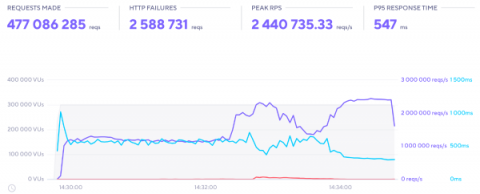
One of the major factors that come into play when deciding on a load testing tool is whether it can perform as you expect it to. There are many ways to measure how well a load testing tool performs, with the amount of requests per second undoubtedly being one of the main ways. Speedscale creates load tests from recorded traffic, so generating load is at the core of the tool.

Five Playwright Tips to Level Up Your Testing Game

I joined Checkly a few months ago, and because our platform enables you to use Microsoft’s Playwright to run your synthetic monitoring, I started getting my hands dirty with the end-to-end testing framework. I’m a massive fan of learning in public, so I started publishing weekly Playwright tips on YouTube. Did you miss a few videos? Don’t sweat it! Here’s the first collection of Playwright tricks I discovered over the last few months.

How we run our Python tests in hundreds of environments really fast

Not in a reading mood? You also can watch the talk I gave at DjangoCon 2022. One of Sentries core company values is “for every developer”. We want to support every developer out there with our tools. But not every developer uses the newest or widely adopted tech stack, so we also try to support older versions of libraries and frameworks.

Everything You Need to Know About Synthetic Testing

Part two of a three-part guide to assuring performance and availability of critical cloud services across public and hybrid clouds and the internet Monitoring your user traffic is critical for knowing the quality of the digital experience you are delivering, but what about the performance of new cloud or container deployments, expected new users in a new region, or new web pages or applications that don’t have established traffic? This is where synthetic testing can be invaluable.

Stress test your Kubernetes application with Speedscale's offering in the Datadog Marketplace

Properly testing a service’s APIs to ensure that it can handle production traffic presents many challenges for engineers—SREs need to guarantee the resiliency of their application, while developers must ensure that their features perform well at any given scale. Speedscale is a testing framework built for Kubernetes applications that enables you to load test with real-world production scenarios by replaying actual API traffic that your application has experienced.