Operations | Monitoring | ITSM | DevOps | Cloud

Harmonizing Inventory Chaos through AI Augmentation

A New Season NFL Football season is upon us. And while I get to spend several hours watching my favorite team, my colleagues at Zebra MotionworksTM are revving up their analysis and insights as "The Official On-Field Player-Tracking Provider" of the NFL. As a fan, I'm amazed by all the information from tracking technology. Besides being cool, it captures data points that weren't even possible before and provides detailed views of players' health and performance.

How merchants can protect revenue with AI-powered payment monitoring

Smooth payment operations are critical for every merchant’s success. At its most basic level, a seamless and reliable payment process is the key to assuring transaction completion, which is at the very core of a merchant’s financial strength. However, when payment data systems fail to deliver insights about issues regarding approvals, checkouts, fees or fraud, the result is revenue loss and sometimes customer churn.

The Complex But Elegant Relationship Between AIOps and Observability

Digital transformation requires organizational evolution. Constant demand for rapid delivery of upgrades and new products forces change. Surely, the old days of managing monolithic applications housed in private servers are over. Applications consist of virtualized, containerized, and serverless code that’s networked via APIs across a hybrid infrastructure of public and private clouds.

What is AIOps? The Importance of Artificial Intelligence for IT Operations

Modern IT environments are so complex, dynamic, and expansive that humans alone cannot effectively manage and maintain them. As a developer and operator, I have had to deal with failed servers and containers, running out of storage space, slow or unreliable network links, bugs in code, and unpredictable workloads in some applications.

Ubuntu Core set to redefine industrial computing with new edge AI platform NVIDIA IGX

Enterprises struggle to bring AI and automation to the edge due to strict requirements and regulations across verticals. Long-term support, zero-trust security, and built-in functional safety are only a few challenges faced by players who wish to accelerate their technology adoption.

The role of AI and ML in the BFSI and FinTech industries

AI and ML technologies are critical components in almost every industry, and the banking, financial and insurance services (BFSI) sector is no different. The introduction of AI in BFSI operations has helped these industries improve their customer centricity, and has enabled them to become more technologically relevant. Key applications rely on AI and ML technologies primarily in the customer care, risk management, and fraud detection domains. Financial technology services have witnessed a boom in the past few years, and AI and ML components are predicted to be vital reasons for this growth in the future.

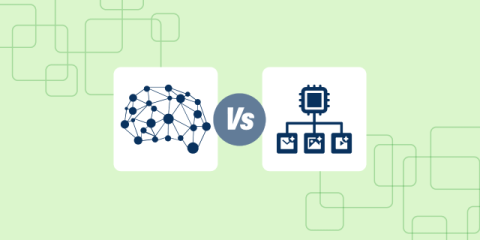
The Difference Between Artificial Intelligence And Machine Learning

Both Artificial Intelligence and Machine Learning are complex things. There are so many things to know. These days human life has changed because of AI. So, before understanding the differences, let’s know about different factors. If I have to say the difference in simple words. AI helps us solve various tasks; on the other hand, Machine Learning is the subset of AI’s specific tasks. So, you can say that all Machine Learning is AI, but all AI is not machine learning.

Sponsored Post

Data Value Gap - Data Observability and Data Fabric - Missing Piece of AI/AIOps

A pivotal inhibitor to mitigate these challenges is the Data Value Gap. Data automation and Data Fabric are emerging as key technologies to overcome these challenges. Learn from industry experts about these key technologies and how they create a lasting impact in enterprise IT.