Operations | Monitoring | ITSM | DevOps | Cloud

The New Economics of Enterprise AI: Why Small Models Win Where It Matters

For years, progress in AI was equated with scale. Larger models, broader parameter counts, and increasingly complex cloud architectures were treated as signals of advancement. In enterprise operations, however, scale alone does not determine success. Economics does. As AI becomes embedded in operational workflows, organizations are discovering that model size is less important than cost stability under continuous load. AI-driven operations do not run in bursts. They run constantly.

The Regional Data Centre Revolution Powered by AI Demand

London still hosts the biggest concentration of UK data centre capacity, but the centre of gravity is starting to move. AI workloads are changing the infrastructure maths, pushing power, space and planning considerations up the decision list. That is exactly where regional locations start to look like the sensible option. Government data shows how concentrated the market remains: as of autumn 2024, London is estimated at 1,048MW of colocation IT load. Compare that with 44MW in the East of England, 17MW in the North East and 30MW in Scotland. The gap is huge, yet it is not a permanent advantage.

What's New in VictoriaMetrics Cloud Q1 2026? Logs, MCP Server, Better Alerting, and... a Secret Project

Q1 2026 has been one of our most eventful quarters yet for VictoriaMetrics Cloud. We shipped something we have been building towards for a long time, crossed a few infrastructure milestones, and started clearing the path for what is coming next to the most performant observability stack.

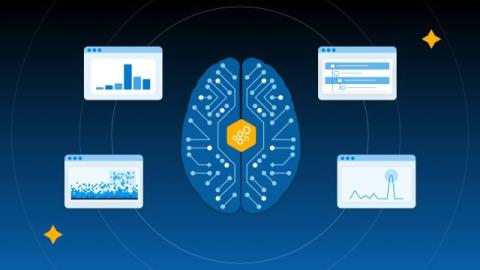
AI Observability in Grafana Cloud: A complete solution for monitoring your agentic workloads

The observability industry has developed great tools for using metrics, logs, traces, and profiles to monitor the cloud native applications that have dominated the last decade of software development. But when it comes to understanding what an AI system is actually doing, we’re often left reading raw conversations, guessing at quality, and reacting too late. And that’s a problem.

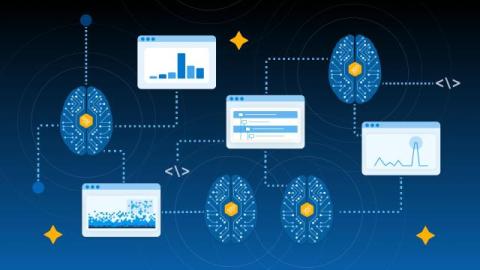
Introducing o11y-bench: an open benchmark for AI agents running observability workflows

Evaluating agents is hard. Verifying observability tasks is harder. Yes, AI agents have gotten dramatically and quantifiably better at coding and tool use, but observability presents a different kind of challenge. In a real incident, the hard part is rarely just writing a query. It's deciding which signal matters, figuring out whether a spike is noise or symptom, correlating metrics with logs and traces, and sometimes making a change in Grafana without breaking the dashboard another engineer depends on.

Claude Opus 4.7 Pricing In 2026: What It Actually Costs (And Whether It's Worth It)

Claude Opus 4.7 holds at $5/$25 per million tokens — but a new tokenizer inflates costs up to 35% on identical text. Here's what Opus 4.7 actually costs at production scale, how it compares to Sonnet 4.6, and the six levers that determine where your bill lands.

Building for the Agentic Era: Engineering Excellence at Harness | Harness Blog

As AI agents become ubiquitous across the software development lifecycle, engineering teams must do more than adopt new tools; they must redesign how they build, verify, and operate software. This post distills the vision, priorities, and best practices that guide engineering excellence at Harness. Different products sit at the heart of the Harness platform.