Introduction to OpenSearch
OpenSearch is a community-driven and truly open source search and analytics suite. Read on for a high-level look at its capabilities.


This article explores some of the ways that invalid data can be rejected when writing to InfluxDB and describes a new feature that makes it easier to know when and why that happens.
Knowing what business problem you want to address will help you know which data mining technique will produce the best results. Each of the data mining strategies listed below addresses a different business challenge and yields a different result. We are surrounded by big data in today’s digital world, which is expected to rise at a rate of 40% per year over the next decade. The irony is that we are awash in data yet deficient in knowledge. Why?
The FinTech revolution is truly transforming the way that we manage our money, bringing new online banks, new models for insurance provision, new ways to access loans, and much more. It rests on a number of pillars, but one of the most important is that of big data.
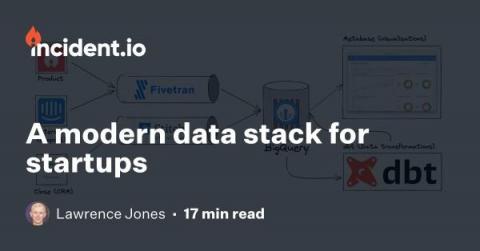
Nowadays, easy access to data is table-stakes for high-performing companies. Easy access doesn't come for free, though: it requires investment and a careful selection of tools. For young companies like us, the question is how much? And when do you make that investment? Having grown to ten people, several without engineering backgrounds but with strong data needs, we decided 2022 was going to be that time.
Founded in 1884 and located in Ghent, Belgium, Algist Bruggeman supplies fresh, liquid, and dried yeast to industrial, semi-artisanal, and artisanal bakeries, as well as to the beer, wine, and pharma industries. Algist Bruggeman is part of the Lesaffre Group, a key global player in fermentation for more than a century. Even with more than a century of industrial production behind it, Algist Bruggeman continues to evolve its manufacturing processes.
As most people were preparing to celebrate the new year, the UK’s Santander Bank was dealing with a crisis. On Christmas day, roughly 75,000 people who received payments from companies with accounts at Santander Bank received a duplicate payment transaction. The total damage amounted to £130m, and recovery in these situations is a painful process for both the bank and its customers.
In this tutorial you will learn how to use the Flux query language to enrich time series data stored in InfluxDB by combining it with metadata stored in a relational database.
In today’s world, data is collected at mind-boggling rates. People of all ages and backgrounds are almost constantly interacting with technology, allowing access to their names, ages, locations, content preferences and more.