Operations | Monitoring | ITSM | DevOps | Cloud

The latest News and Information on API Development, Management, Monitoring, and related technologies.

Refactor Safely with AI: Using MCP and Traffic Replay to Validate Code Changes

So as software engineers using AI coding assistants, we’re quickly learning of a new anti-pattern: Hallucinated Success. You give your agent (e.g. Claude via terminal or various IDE code assistants) the command “refactor the billing controller.” The agent happily complies, churning out nice clean code. The agent even goes so far as to write a new unit test suite that passes at 100%. You integrate it. Your test suites pass. Your production code breaks. Why?

How to Choose the Right API Monitoring Tool for Production Environments

APIs are no longer just technical connectors between systems; they are production infrastructure. Customer-facing applications, partner integrations, payment flows, and internal microservices all depend on APIs working correctly, consistently, and at scale. When an API fails, the impact is rarely limited to a single endpoint; it can disrupt user journeys, compromise revenue, and breach service-level agreements (SLAs).

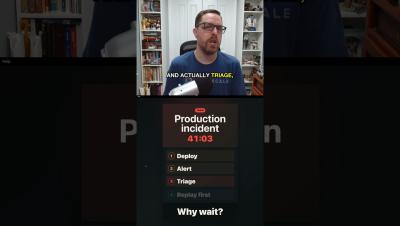
The Hidden Cost of 30% AI-Generated Code #speedscale #aicoding #devops #technews #ai

AI now writes 30% of Big Tech’s code, but the resulting surge in defects is crashing platforms like AWS and GitHub. Manual testing can no longer keep up with this velocity; it's time to deploy AI Quality Agents to save our systems. Is AI speed worth the decline in code quality, or are we headed for a breaking point? Let me know if you’ve noticed more bugs in your workflow lately. Video collab with @ScottMooreConsultingLLC.

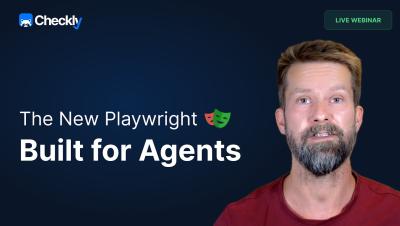
Scaling AI Reliability: Real world lessons from Mistral AI

How does one of the world's leading AI companies keep its infrastructure reliable while shipping new models constantly? In this webinar, Devon Mizelle, Senior SRE at Mistral AI, shares the real story. Devon walks through how Mistral built an automated system that generates synthetic checks for every model the moment it goes live—no manual configuration, no forgotten monitors, no inconsistent alerting. Using monitoring as code, his team eliminated the toil of maintaining hundreds of checks across a rapidly evolving model ecosystem.

What API Performance Monitoring Looks Like in Real Production Environments

API performance monitoring has become a critical discipline for modern engineering teams, but most conversations around it stop at metrics, dashboards, and testing tools. Teams measure response time, track error rates, and run performance tests before release, yet APIs still slow down, silently fail, or violate SLAs in production. The problem isn’t a lack of monitoring. It’s a mismatch between how APIs are tested and how they actually behave in the real world.

API Monitoring: Metrics, Best Practices, Tools, and Setup Playbooks

Modern systems rarely fail in obvious ways. An API might slow down in one region, return subtly incorrect data after a : deploy, or degrade only under specific traffic patterns. By the time users report the issue, it has often already impacted reliability, revenue, or trust. This is why API monitoring has evolved from a simple uptime check into a core production discipline.

Gemini Cost Per API Call in 2026: What You'll Actually Pay (And How to Control It)

On paper, Gemini pricing looks straightforward. You pay per token. Input tokens cost one amount, output tokens cost another, and different models come with different rates. But once Gemini is wired into a production SaaS product, that simplicity disappears. Fast. That’s because token usage compounds across context, retrieval, and output — not across requests. The same “API call” can cost pennies in one feature and dollars in another.

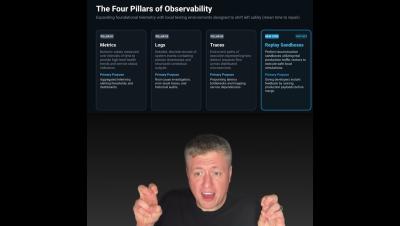
Can We Still Trust the Code? #speedscale #qualityassurance #digitaltwin #trust #devops

The "Velocity Gap" is real. AI like Claude and GitHub Copilot are pumping out code faster than ever, but there’s a catch: Engineers don't trust it yet. We’re moving away from the old days of "clicking around" in a test environment, but how do we verify code at the speed of light? Ken breaks down why the future of QA isn't just "testing," it’s simulation. Video collab with @ScottMooreConsultingLLC Learn More: speedscale.com.

Monitor groups are now supported in the API

We recently launched monitor groups, making it easier to organize monitors on your boards and status pages. Now that same functionality is available in the StatusGator API, so you can manage monitor groups programmatically. The API now supports listing, creating, updating, and deleting monitor groups on a board. You can also assign or remove monitors from groups when creating or updating a monitor.