Operations | Monitoring | ITSM | DevOps | Cloud

The latest News and Information on API Development, Management, Monitoring, and related technologies.

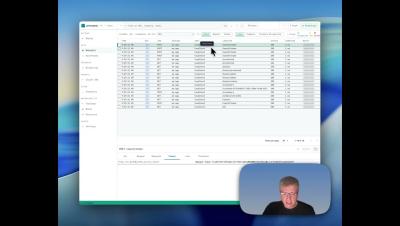
Stop wasting time on Postgres migrations. #speedscale #postgresql #postgres #database #programming

If you're spinning up a whole container just for one test, you’re doing it wrong. Old way: Full DB container + pg_restore New way: speedscale + proxymock It records actual DB traffic and mocks it "on the wire." Test smarter, not harder.

API Uptime Monitoring Explained: How to Measure True API Availability in Production

For many teams, API uptime monitoring still means one simple thing: checking whether an endpoint responds with a 200 OK. If the check passes, the API is marked as “up.” If it fails, an alert is triggered. On paper, that sounds reasonable. In practice, it’s one of the most common reasons API outages go unnoticed until users complain. The problem is that modern APIs are no longer simple, stateless endpoints.

API Health Monitoring Explained: How to Detect Silent Failures That Health Checks Miss

APIs sit at the center of modern digital systems. They power mobile apps, enable partner integrations, and connect internal services across distributed architectures. When an API fails, the impact is immediate: broken user journeys, stalled transactions, and downstream systems that quietly stop working. That’s why API health monitoring is now a core reliability practice for modern engineering teams. The problem is that “API health” is often defined too narrowly.

Top API Auth Mistakes (JWT, OAuth, keys)

APIs are the connective tissue of the modern digital world. They power our mobile apps, enable microservices to communicate, and connect us to third-party data. But this central role also makes them a prime target for attackers. While we build powerful functionalities, it's often the simplest oversights in authentication that leave the front door wide open.

ROI of Digital Twin Testing: Cut Testing Costs by 50%

When engineering leaders review their cloud bills, they often focus on production costs—the infrastructure serving real users, processing real transactions, generating real revenue. But there’s a shadow cost lurking in every cloud environment that often goes unnoticed until it becomes painful: non-production infrastructure.
Sponsored Post

Digital Twins Gone Wild: My Unexpected AI Doppelgänger

I recently tried using AI to create a digital twin of myself. I uploaded a photo, expecting a futuristic, slightly improved version of me... and what did I get in return? A picture of Kim Jong Un. Clearly, AI has a sense of humor-or a very different definition of "twin." Forget Arnold Schwarzenegger and Danny DeVito. Digital Twins 2-Now Starring My AI Doppelgänger From Speedscale's perspective, a digital twin is built from real production traffic, continuously updated, and executable in your test and CI/CD environments.

Moving Our Observability Data Collector from Sidecars to eBPF

For years, the Kubernetes sidecar pattern has been a practical way to capture observability data. Running a collector alongside each application pod gave us deep visibility into traffic, including full request and response payloads across supported protocols. However, as cloud-native environments have grown more complex, the limitations of sidecars—such as resource overhead, operational complexity, and scaling challenges—have become more apparent.