

Operations | Monitoring | ITSM | DevOps | Cloud

The missing piece: bringing up to 15 years of support to Zephyr for microcontroller-based ECUs

We recently announced the launch of Zephyr 26.04 LTS, bringing up to 15 years of security maintenance per LTS and enterprise lifecycle management to microcontroller-grade devices. While central high-performance computer ECUs capture most of the industry spotlight in software-defined vehicle (SDV) architectures, the operational reality of modern vehicles is far more distributed.


Cradlepoint R1900: Deployment Configuration Guide for Enterprise IT Administrators

When an enterprise IT team faces the challenge of deploying secure, high-performance wireless connectivity at remote or mobile sites, the Cradlepoint R1900 router often stands out for its rugged build and advanced networking capabilities. Imagine outfitting a fleet of emergency response vehicles or setting up edge connectivity at a construction site-both scenarios demand reliable network performance under harsh conditions. IT administrators must not only install and configure these devices but also ensure they integrate seamlessly with existing infrastructure and adhere to strict security standards.

Occupational Safety Tech: How Modern IoT and Sensors Are Preventing Future Worksite Toxins

Chemicals lurk in industrial air unnoticed until someone gets sick. According to estimates from the International Labour Organization, over one billion workers face hazardous substance exposure globally every year.

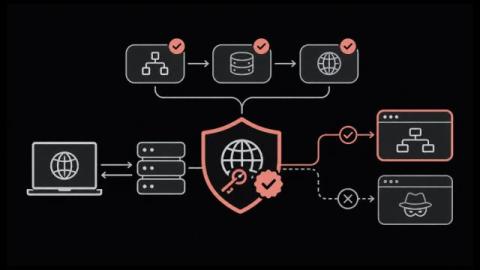
What Is DNSSEC? How DNS Security Extensions Stop Spoofing

Why would a domain with correct records, healthy name servers and a valid certificate stop resolving for part of the internet? Often it's DNSSEC. Your records are fine; the signatures behind them are not, and any resolver that checks signatures now refuses to answer. DNSSEC was designed to stop spoofing and cache poisoning, and it works. The catch is operational.

It was the best of times, it was the worst of times, for software security

Microsoft fixed more than 1,400 vulnerabilities in its October Patch Tuesday. That’s one month, and it’s more than in all of 2025. Two weeks later, Anthropic said an unreleased Claude model had found and exploited serious vulnerabilities in Chrome, Safari, Android, Windows, and Linux. AI is finding bugs faster than anyone can fix them. Inside CertKit, we’ve been quoting Dickens, “It the worst of times.” AI makes our small team fast.

Nokogiri 1.19.5 Closes Three Security Advisories and a Wave of Compaction Crashes

Nokogiri sits under so much Ruby code that its patch releases are worth reading even when the version number looks routine. 1.19.5 is a patch release carrying three security advisories and a long list of crash and memory fixes, so it’s worth pulling in on your next dependency pass.

MongoDB's Node Driver 7.8.0 Patches Two Real Security Issues

If your Node app talks to MongoDB through the official mongodb driver, 7.8.0 is worth upgrading to before your next routine dependency pass. It’s a minor version by the number, but it carries two security fixes, and one of them changes how a feature you may already be using behaves.

The SOC 2 compliance checklist: Every step from scope to audit

Many engineering organizations first encounter SOC 2 when a customer or prospect requests proof of compliance before proceeding with a relationship. Access controls, change management processes, logging configurations, vulnerability scanning, and incident response procedures all need to be in place, documented, and producing evidence before an auditor evaluates them. A 2026 benchmark of 75 SOC 2 examinations found that these engineering-owned areas were the most common sources of exceptions.

How long does it take to replace every certificate after a CA distrust?

Last week we moved every certificate in one of our products to a new CA in 10 minutes. It was six certificates and 18 deployments. I said issuance was the part that slows down, because most CAs limit how fast you can order, and then I waved it off. A reader did the math for me. Some organizations run 30,000 certificates, they claimed, and that’s common at MSPs, telcos, and government agencies. Google Trust Services takes 100 orders an hour by default.

The Jolokia Problem: Eight CVEs, One Door in Apache ActiveMQ

The Apache ActiveMQ Jolokia endpoint has been the route to remote code execution in three separate years. In 2023, it was reflection into the JVM. In 2024, a default configuration left it without a login. In 2026, it was the broker's own management operations, patched in March, exploited in April, and reopened three more times by summer.

What a 'Kill Switch' Actually Means for Your Agent Fleet

In short, in the five weeks to 27th October 2026, Okta, Satya Nadella, the Cloud Security Alliance and Salesforce each put the words “kill switch” or “emergency brake” next to AI agents, and the AI Kill Switch Act, introduced in the US House on 23rd July, would require the largest model providers to be able to throttle, suspend or shut their systems down on order. Every one of those switches stops something, and none of them stops the same thing.

The Binance Breach Wasn't a Crypto Failure: It Was a Trust Failure

Explore how the $6.36B Binance breach exposed critical gaps in identity, DevOps, and signing security - and what engineering teams can learn from it. The October 29, 2026 theft from Binance is best read as a failure of identity and release-path trust, not a failure of cryptography. Binance's early findings point to a compromised DevOps engineer's laptop that gave an attacker a route into a service container and the ability to submit unauthorized withdrawals.

PCI Compliance Logging: Complete Guide to Requirement 10

Of the 12 Payment Card Industry Data Security Standard (PCI DSS) requirements, Requirement 10 is one your platform team can engineer directly. Under the PCI DSS v4.0.1 standard, automated log review has been a tested requirement since March 31, 2025. Your assessor will test the mechanism that performs the review. This PCI compliance logging guide covers each 10.x sub-requirement, maps the seven event classes to log sources, and lays out a nine-step program you can hand to your assessor.

The $6.3B Binance Hack: What Happened and What It Teaches Security Teams About Investigation

TL;DR On October 29, 2026, attackers drained about $6.3 billion in crypto assets from Binance’s hot wallets, the largest crypto theft on record. Binance says the incident may have started with a compromised laptop, but its investigation has since found additional points of breach, and the root cause is still being confirmed. For engineering and security teams, the lesson is about how quickly you can reconstruct what happened across many systems once something goes wrong. In this post.