Operations | Monitoring | ITSM | DevOps | Cloud

The latest News and Information on Cloud monitoring, security and related technologies.

How Will We Hold AI Accountable For Risky Investments?

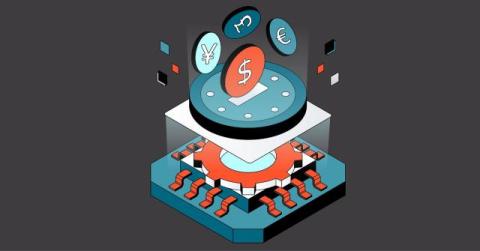
The word “Trillion” never fails to set the tech world on fire. Foundation Capital’s Jaya Gupta and Ashu Garg are two of the most recent firestarters. Late in December, they co-wrote “AI’s trillion-dollar opportunity: Context graphs,” outlining how AI will transition from organizational knowledge to organizational comprehension.

Cloud Cost Optimization Framework: Build Your FinOps Practice (2026)

Quick answer: A cloud cost optimization framework is a structured, repeatable system for managing cloud spend across people, processes, and tools. It defines how teams gain cost visibility, allocate spend to the right owners, optimize resources and rates, and measure whether spend is generating business value. The FinOps Foundation organizes this around three phases: Inform, Optimize, and Operate — and the Crawl, Walk, Run maturity model maps directly to how organizations progress through them.

The reproduction problem: why you can't recreate the investigative gap

In the modern dev stack, we have mastered the art of the deploy. We have CI/CD pipelines that ship code in minutes and observability dashboards that track every millisecond of latency. Yet, when a P0 incident strikes, the most common phrase in Slack isn’t a solution; it’s "I can’t reproduce this locally." This is the Reproduction Gap. Most engineering teams are world-class at building and monitoring, but they are remarkably fragile at recreating runtime behaviour.

Why Cloud and DevOps Practices Matter to Prop Trading Firms

The financial industry has always been driven by speed, precision, and the ability to act on information faster than anyone else. In recent years, prop trading firms have found themselves at a crossroads where traditional infrastructure simply cannot keep up with the demands of modern markets. Cloud computing and DevOps practices have emerged as two of the most transformative forces reshaping how trading operations are built, managed, and scaled. Understanding why these technologies matter is not just useful for tech teams, it is essential knowledge for anyone involved in or curious about the future of high-performance trading.

That production incident cost more than downtime

Every developer knows the sudden, cold spike of adrenaline that comes with a P0 alert. The site is down, the Slack channel is overwhelmed with notifications, and the "war room" is officially open. In the immediate aftermath, leadership looks at one metric: downtime. They calculate the lost revenue per minute and the hit to brand reputation. But for the engineering team, the official resolution of the incident is only the beginning.

Debugging the black box: why LLM hallucinations require production-state branching

The most frustrating sentence in modern engineering is no longer "it works on my machine." It is: "It worked in the playground." When an LLM-powered feature, such as a RAG-based search, an autonomous agent, or a dynamic prompt engine, fails in production, it doesn’t throw a standard stack trace. It returns "slop," hallucinations, or silent retrieval failures. Standard debugging workflows fail during triage because LLM hallucinations cannot be reproduced using static mocks or clean seed data.

The single pane of glass approach to cloud monitoring

Dozens of SaaS services you depend on, starting from Google Workspace and Slack to Shopify, may experience downtime, partial outages, or degraded performance. And most have their own status pages, APIs, or RSS feeds. Juggling all these sources is exhausting, and many teams suffer from alert fatigue, missed early warnings, and fragmented visibility.

When we say "Observability AI Reckoning," what are we actually talking about?

We’ve spent the last decade collecting more telemetry. Now AI is analyzing it. Here’s the catch: AI needs the full dependency chain to reason correctly. If it sees spans but not storage contention… Services but not Kubernetes scheduling… Frontend metrics but not downstream providers… It will confidently optimize the wrong thing. AI doesn’t lower the need for observability. It raises the standard.