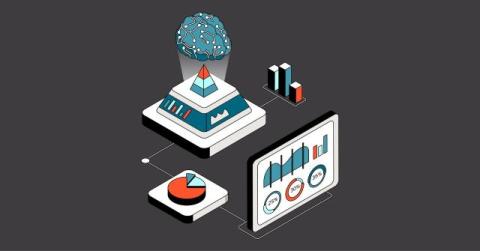
Organisations running AI workloads, like banks training fraud detection models, hospitals testing diagnostic tools, or manufacturers using predictive analytics, all face the same problem: hosting them is costly and resource-intensive. They require dedicated GPUs running non-stop, vast amounts of data moving in and out, and far more power and cooling than a typical IT system.
Modern software teams are under pressure to deliver faster, more reliably, and with improved cost efficiency. In this webinar, experts from GitHub, Octopus Deploy, Arm, and AWS will share insights on how to combine these technologies into a powerful end-to-end pipeline that achieves all three goals.
When CloudZero CTO Erik Peterson joined the SourceForge podcast in January 2026, he didn’t just talk about cloud costs. He reframed them as a launchpad for innovation, survival, and competitive advantage. Whether he was describing the “trough of lost innovation,” the “freemium tax,” or why efficiency is the next frontier of engineering culture, Erik’s expert insights go beyond FinOps hygiene.
Consider this: traditional cloud cost monitoring was like checking your fuel gauge once a month — after the trip was already over. That model worked when infrastructure scaled slowly. You provisioned resources predictably and paid for stable, linear usage. AI breaks that model. Today, AI costs behave like a high-performance engine with a hypersensitive throttle. A small input, like a prompt change or a single power user, can dramatically increase your fuel burn in seconds.
Reactive cloud cost-cutting leads to “Infrastructure Atrophy,” sacrificing performance and reliability for short-term savings. The 2026 solution is cloud cost optimization, leveraging scale-to-zero and pay-per-use architectures to eliminate idle waste without compromising product health.
Cloud commitments don’t fail because the math is wrong. They fail when teams chase flexibility instead of designing for it. In this short blog, I will walk you through a multi-cloud strategy (AWS and Azure) that uses Savings Plans, Reservations, and Marketplace Reserved Instances, without getting locked in.
With all we’ve seen from AI in the last several years, it can be easy to forget that it’s still in its very early days. As torrid as its evolution has been thus far, it will only intensify. As SVP of Engineering at a B2B SaaS company, I’ve had a front-row seat for much of this evolution. Here are three ways I see AI heading in 2026.
Block storage is a method for companies to manage files and databases by storing data in blocks for efficient and fast data access. It is similar to object storage, but depending on your needs, you may want to know which option better meets your needs. In this article, we will cover the following topics to help you understand: We will also offer options for you to get started with managing your storage for business with Internxt.
As organizations grow their cloud environments and branch office networks, maintaining reliable connectivity and application performance becomes more complex. VeloCloud SD-WAN provides dynamic, policy-based routing to help ensure that your connectivity is dependable and cost-efficient, and that your applications perform consistently.