Nokia selects Infovista to deliver cloud-based automated drive testing to accelerate roll-out of 5G deployments
Global partnership includes centralized management and automation of critical testing process for new 5G and legacy networks.


The latest News and Information on Cloud monitoring, security and related technologies.
I have been an AWS customer since 2010 and in the early days I, along with just about everyone else on AWS, spent a lot of my time just managing infrastructure. Patching AMIs, configuring load balancers, updating auto-scaling configurations, and so on. It was the sort of thankless task that no one cared about until something went wrong! The very definition of what Werner Vogel often refers to as “undifferentiated heavy-lifting”.
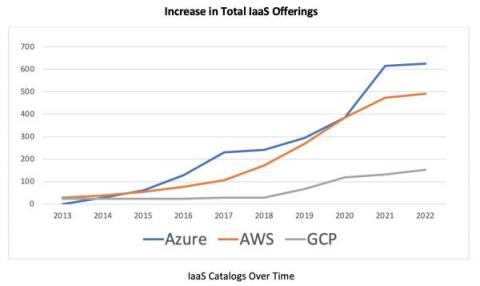
So, you’re looking for the right instance type for your public cloud workload, but how do you decide? Major cloud providers such as Amazon Web Services (AWS), Microsoft Azure Cloud and Google Cloud Platform (GCP) now offer such a large catalog of IaaS instances that it can become difficult to make sense of it all.