Operations | Monitoring | ITSM | DevOps | Cloud

The latest News and Information on Cloud monitoring, security and related technologies.

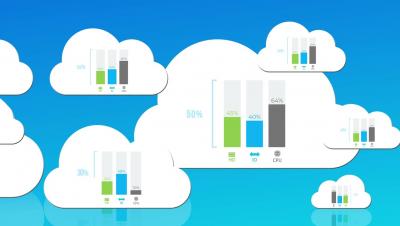
Ensure Cloud Security With These Key Metrics

Over the past decade, the way we build and deploy applications has changed dramatically. The explosion of public cloud providers enables us to deploy software without engaging in a drawn-out process to procure and set up infrastructure. Agile, DevOps, Continuous Integration, Continuous Deployment, and other changes to how we work have dramatically accelerated the speed with which we can get new applications and updates in front of our users.

How Lowe's meets customer demand with Google SRE practices

At Lowe’s, we’ve made significant progress in our multiyear technology transformation. To modernize our systems and build new capabilities for our customers and associates, we leverage Google’s SRE framework and Google Cloud, which helps us meet their needs faster and more effectively. With these efforts, we’ve been able to go from one release every two weeks to 20+ releases daily—about 20X more releases per month.

What is IaaS? How IaaS Different from SaaS and PaaS?

The cloud is a hot topic for everyone from small companies to multinational corporations, but it's also a vast term that covers a lot of online ground. It's more important than ever to appreciate the differences and benefits of the different cloud providers when you consider moving your company to the cloud, whether for application or infrastructure deployment. Infrastructure-as-a-service (IaaS) is a cloud-based service that provides virtualized computing resources to businesses over the internet.

Build a CircleCI Dashboard to visualize all your CI/CD data

If you’ve checked out SquaredUp for SCOM/Azure and decided for one reason or another that it wasn’t the right tool for you, you are in for a treat! Our latest free tool, Dashboard Server, addresses many of the same pain points, but this time, for a variety of platforms not tied to SCOM or Azure. On the flip side, if you’re currently using SquaredUp for SCOM/Azure, don’t click away!

Azure Monitor for Windows Virtual Desktop (WVD)

At the end of March 2021, Microsoft released Azure Monitor for Windows Virtual Desktop (WVD) for General Availability. Built upon Azure Monitor Workbooks to give insights into the Windows Virtual Desktop environment, including: Connection Diagnostics, Connection Performance, Host Diagnostics, Host Performance, Utilizations, Users, Clients and Alerts.

Integration of Enterprise Alert 9 with AzureMonitor

Our Azure Monitor connector provides seamless 2-way integration of Enterprise Alert 9 with Azure Monitor. Once added to your Enterprise Alert instance, the connector will read your Azure Monitor alerts fully automatically and trigger alert notifications, e.g. to your team members on duty. It also synchronizes the alert status from Enterprise Alert 9 to Azure Monitor so that if alerts are acknowledged or closed, this status is also updated on the according alert in Azure Monitor.

Decoding Azure Service Bus Exceptions for Operational Excellence

Consider an E-Commerce Application with millions of users, built with various microservices. Since these microservices are decoupled, highly scalable, the communication and data sharing should be more reliable and seamless for business continuity. Here comes the Enterprise Service Bus technology. An enterprise service bus implements a communication system between mutually interacting software applications in a service-oriented architecture (SOA).

Anodot vs. AWS: Which Has the Most Accurate Cloud Cost Forecasts?

The move to cloud computing has been a no-brainer for many enterprise companies. But cloud computing is an expense that, unlike many other operating costs, is largely variable. Many companies — including the fastest-growing startups, largest enterprises, and leading government agencies — choose AWS to help them streamline fragmented processes, reduce costs, become more agile, and innovate faster.

Debugging with Dashbird: Resolving the Most Common API Gateway Request Errors

Adding an API Gateway to your application is a good way to centralize some work you usually have to do for all of your API routes, like authentication or validation. But like every software system, it comes with its own problems. Solving errors in the cloud isn’t always straightforward, and API Gateway isn’t an exception. AWS API Gateway is an HTTP gateway, and as such, it uses the well-known HTTP status codes to convey its errors to you.