
The latest News and Information on Cloud monitoring, security and related technologies.
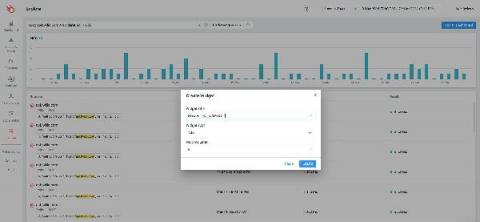
We recently released the Lumigo Dynamic Dashboard to help our customers visualize metrics to monitor their environment the way they want.
COVID-19 certainly accelerated some trends. For example, in my view, COVID-19 accelerated the pace and progress of digital transformation by five to 10 years, as companies faced the need to adapt to a post-COVID-19 world, involving permanently the higher adoption of remote work, remote education, and digital touch-points. Technologies requiring less human touch and more digital touch-points will be adopted faster in the aftermath of COVID-19.
Hybrid IT is here to stay. As companies are moving to the cloud faster than ever, fueled by necessity during the pandemic, enterprise IT organizations must determine how to shift operations accordingly. Managing highly-distributed, multi-cloud IT environments is the new norm.
With the volume, velocity, and variety of today’s data, we have all started to acknowledge that there is no one-size-fits-all database for all data needs. Instead, many companies shifted towards choosing the right data store for a specific use case or project. The distribution of data across different data stores brought the challenge of consolidating data for analytics.
Automation of operational tasks frees the workforce to strategize and innovate in their respective quarters and develop new mechanisms to accelerate an organization’s overall performance. That paved way for low code platforms to become a new reality in the realm of app development. Microsoft’s Powerapps is one such platform whose usage has flared up in recent years as a solution that enables app building with zero knowledge of codes and programming.