Operations | Monitoring | ITSM | DevOps | Cloud

The latest News and Information on Containers, Kubernetes, Docker and related technologies.

The Top 7 Open Source Tools for Securing Your Kubernetes Cluster

This article explores how to secure production Kubernetes clusters with the help of open source tools. As a prerequisite, you’ll need to have basic beginner-level knowledge of Docker and Kubernetes. In a nutshell, Kubernetes is a container orchestration tool and Docker is a containerization platform. Some of the most famous Kubernetes clusters managed by cloud providers include AWS EKS, Azure AKS, and Google CKE.
Containerization and Kubernetes Monitoring

As cloud-native solutions are gaining recognition and becoming a common approach to developing applications, more attention has been directed towards container orchestration and Kubernetes. Both concepts within the realm of IT have been around for a while. Thanks to the technologies' maturing and cloud adoption, they've recently gained significant attention. We all know that software containers are far from traditional shipping containers, yet they function similarly: they standardize and combine.

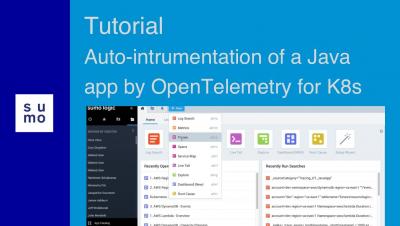
Tutorial: Auto-instrumentation of a Java app by OpenTelemetry for K8s Environment

This tutorial demonstrates how to auto-instrument a Java app by OpenTelemetry for Kuberenetes easily with the help of a sample Java app. It also shows how to connect it to the hosted collector, and trace the transactions in Sumo Logic. Learn the prerequisites and the detailed step-by-step auto-instrumentation process in this tutorial. Reference Links: Links to refer to or download useful material to try the steps independently.

Introducing our exciting new ambassador program: Calico Big Cats

The Project Calico community is one of the most collaborative and supportive communities in the open-source space. Our community has shown great engagement through the years, which has helped us maintain and grow the project. Thanks to our 200+ contributors from all over the world, Calico Open Source (the solution born out of the project) is powering 1.5M+ nodes daily across 166 countries.

The Impact of CVE-2022-0185 Linux Kernel Vulnerability on Popular Kubernetes Engines

Last week, a critical vulnerability identified as CVE-2022-0185 was disclosed, affecting Linux kernel versions 5.1 to 5.16.1. The security vulnerability is an integer underflow in the Filesystem Context module that allows a local attacker to run arbitrary code in the context of the kernel, thus leading to privilege escalation, container environment escape, or denial of service.

The Top 5 Kubernetes Configuration Mistakes-And How to Avoid Them

Let’s face it – Kubernetes can (and is) oftentimes very complex. This means that you’re bound to make a cluster configuration mistake along the way – apart from it impacting your cluster’s performance and security, it can also heavily affect your ability to enforce visibility and troubleshooting. There is, however, a light at the end of the tunnel.

What's new in Sysdig - January 2022

As you already know, the “What’s new in Sysdig” blog team is involving more and more people, and this month is up to me, Giulio Puri. I’m based in Milan, Italy, and I’ve been part of the Sysdig EMEA team since May, 2021 as a Sales Engineer. I’m passionate about technology, innovation and cybersecurity, and in my free time, I love to cook, experiment with recipes and – not always successfully – surprise my friends with new dishes.

From Kálmán to Kubernetes: A History of Observability in IT

You know that observability plays a crucial role in helping to manage today’s distributed, cloud-native, microservices-based applications. But you may be surprised to learn that – despite its close association with modern applications – observability as a concept was born more than a half-century ago. Its origins stretch all the way back to the late 1950s, long before anyone was talking about microservices and the cloud.

Single-command Docker environments on any machine with Multipass

Multipass exists to bring Ubuntu-based development to the operating system of your choice. Whether you prefer the GUI of macOS (even on M1), Windows or any other Linux, the unmatched experience of developing software on Ubuntu is there at your fingertips, just one “multipass launch” away. Today, the Multipass team is delighted to enhance this experience for developers working with containerised applications!