Operations | Monitoring | ITSM | DevOps | Cloud

The latest News and Information on Containers, Kubernetes, Docker and related technologies.

Civo update - November 2021

In case you missed the big news, after almost two years in beta and early access phases, Civo is now general availability! Find out what this means for Civo and the future of the platform over at our blog. We've also launched the first-ever Civo Hackathon! This is an initiative to bring together developers, architects, experts, and students from across the globe to develop innovative Kubernetes projects on Civo.

Five Kubernetes Deployment Best Practices (Part 2)

In our previous post , we focused on tips for making the transition and migration to Kubernetes a smoother, and less painful process. In this post, we’d like to now provide some tips from the operational trenches for future-proofing your Kubernetes operation, after making the move. Kubernetes, as a software-driven system, has many benefits for engineers and DevOps teams to take advantage of.

Four Best Practices to Migrate to Kubernetes (Part 1)

Kubernetes has evolved into the leading platform to build your microservices systems. Given its increased maturity over the past few years as well as the robust ecosystem which has been built around its technology, Kubernetes has become more production-ready than ever. Nevertheless, it still has its own unique set of challenges. In particular, it brings a lot of complexity into play with its adoption.

Fast and simple troubleshooting with GUI-based Dynamic Packet Capture

With the Calico 3.10 release, Dynamic Packet Capture is available in Dynamic Service Graph. This means users who require self-service, live troubleshooting for microservices and Kubernetes workloads can capture and evaluate traffic packets on endpoints without writing a single line of code or using any 3rd-party troubleshooting tools. Users don’t need to learn about or have knowledge of kubectl or YAML to troubleshoot their microservices and Kubernetes cluster.

KubeCon North America 2021 roundup

KubeCon/CloudNativeCon North America 2021 was a whirlwind of sessions, talks, panels, bonding, and learning. As it was a hybrid event, Civo was represented both in person at a booth that featured Sophia and David from our North American team, as well as virtually through our online booth and talks. Plus, we made an announcement of the General Availability of Civo Kubernetes at the event!

Open Source for Better Observability

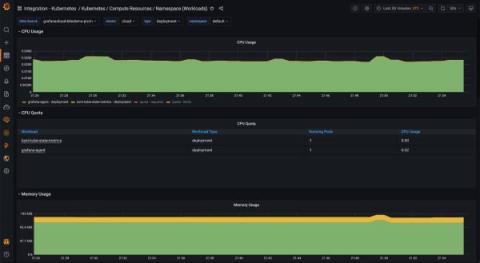
Monitoring cloud-native systems is hard. You’ve got highly distributed apps spanning tens and hundreds of nodes, services and instances. You’ve got additional layers and dimensions—not just bare metal and OS, but also node, pod, namespace, deployment version, Kubernetes’ control plane and more. To make things more interesting, any typical system these days uses many third-party frameworks, whether open source or cloud services.

Learn How to Simplify Kubernetes Performance Management | Pepperdata

Complex applications running on Kubernetes scale super fast, but this can create visibility gaps that can make detecting and troubleshooting Kubernetes issues as difficult as finding a needle in a haystack. Although Docker and Kubernetes are now becoming standard components when building and orchestrating applications, you’re still responsible for managing the performance of applications built atop this new stack.