From Docker to Kubernetes
A follow-up to the Introduction to Docker video, for anyone who wants to know a bit more about Docker & Kubernetes and why container orchestration matters.


The latest News and Information on Containers, Kubernetes, Docker and related technologies.
In this blog, we will explore suspicious file activity inside a container and see how to effectively implement a file integrity monitoring (FIM) workflow. We’ll also cover how Sysdig Secure can help you implement FIM for both containers and Linux hosts.
In Kubernetes, Ingress objects define rules for how to route a client’s request to a specific service running inside your cluster. These rules can take into account the unique aspects of an incoming HTTP message, including its Host header and the URL path, allowing you to send traffic to one service or another using data discovered in the request itself. That means you can use Ingress objects to define routing for many different applications.
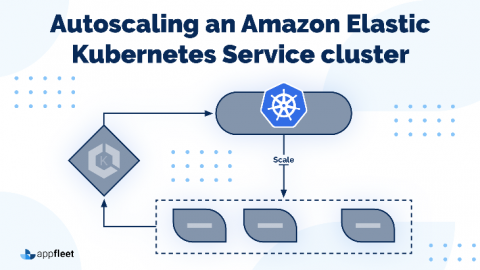
In this article we are going to consider the two most common methods for Autoscaling in EKS cluster: The Horizontal Pod Autoscaler or HPA is a Kubernetes component that automatically scales your service based on metrics such as CPU utilization or others, as defined through the Kubernetes metric server. The HPA scales the pods in either a deployment or replica set, and is implemented as a Kubernetes API resource and a controller.
This article will focus on using fluentd and ElasticSearch (ES) to log for Kubernetes (k8s). This article contains useful information about microservices architecture, containers, and logging. Additionally, we have shared code and concise explanations on how to implement it, so that you can use it when you start logging in your own apps. Useful Terminology.
Many enterprises have already adopted Kubernetes or have a Kubernetes migration plan in place, making it clear that the platform is here to stay. While it provides a lot of benefits to its users, to take advantage of them, you need to thoroughly learn Kubernetes and how it works in production. Typically, the most difficult aspects of Kubernetes are learned through experience solving real-world problems.
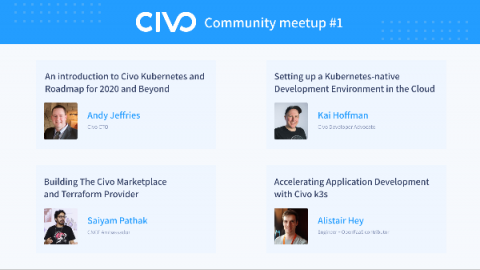
The very first Civo Community Meetup is here! Episode #1 featured talks from Civo CTO Andy Jeffries and Developer Advocate Kai Hoffman, alongside #KUBE100 community members Saiyam Pathak and Alistair Hey. This meetup not only focussed on the direction of Civo and what's in store for the future for us, but also shared insights into the Civo marketplace and Terraform provider, plus k3s development using OpenFaaS with Civo k3s.
Since almost the beginning of programming, the idea of write-once and deploy everywhere, on all platforms, has been an unreachable ideal to minimize development costs for cross-platform applications, drive UI consistency and reduce security service area. In programming, the cross-platform languages Java and Python have topped developer utilization charts for decades.