Operations | Monitoring | ITSM | DevOps | Cloud

The latest News and Information on DevOps, CI/CD, Automation and related technologies.

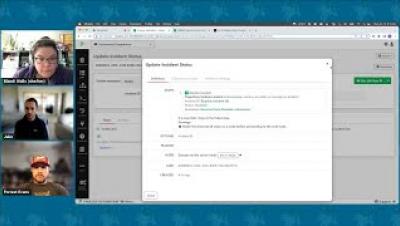
Efficiently Upgrading Infrastructure with Qovery: Syment's Success Story

Join us as we take a deep dive into the tech journey of Syment, a leading SAAS platform for property management in France. Led by new CTO Florent Blaison, with a wealth of experience in high-traffic platforms and scalability, Syment set out to overcome the limitations of their previous infrastructure. Discover how they transitioned from a mix of manual deployment and AWS's EC2 to the flexibility and scalability of Kubernetes with Qovery.
APIs Impact on DevOps: Exploring APIs Continuous Evolution

An application programming interface (API) is a set of rules and protocols that enables different software applications to communicate and share data and functionality. The concept of an API has been around for a long time. However, APIs as you know them emerged in the late 1990s and early 2000s with the rise of the internet and web-based services. As more businesses began to offer online services, the need for a standardized way for these services to interact and share data became apparent.

Challenges and Solutions with Cloud Native Persistent Storage

Persistent storage is essential for any account-driven website. However, in Kubernetes, most resources are ephemeral and unsuitable for keeping data long-term. Regular storage is tied to the container and has a finite life span. Persistent storage has to be separately provisioned and managed. Making permanent storage work with temporary resources brings challenges that you need to solve if you want to get the most out of your Kubernetes deployments.

5 DCIM Software Success Stories as Told by Real Customers

Managing a data center is not easy. Today’s data center professionals must maintain uptime, increase the efficiency of capacity utilization, and boost the productivity of people in more complex and more distributed environments than ever before. Legacy management tools like Excel, Visio, and homegrown systems no longer get the job done for the modern data center. They are hard to use, difficult to maintain, time-consuming, and error-prone.

6 Strategic Reasons Why Businesses Need Remote IT Support

Why Remote IT Support: Many businesses across a variety of different sectors are choosing to outsource their technology needs through remote IT support. As a result, you tend to get quicker response times and sector-specific help when you work with remote teams. Additionally, remote work is highly attractive to a lot of skilled professionals, so you are much more likely to work with an expert in the field.