Operations | Monitoring | ITSM | DevOps | Cloud

The latest News and Information on DevOps, CI/CD, Automation and related technologies.

Serving Files with Puppet - Part 2 - Implications and Performance

The second in a three-part series, where Adrian Parreiras Horta, Support Engineer at Puppet, takes us through the different methods of serving files with Puppet, and how this impacts the performance of the Puppet ecosystem. Part 2 discusses the implications on performance for the methods previously discussed.
Serving Files with Puppet - Part 1 - File Resource Source Attribute

The first in a 3 part series, where Adrian Parreiras Horta, Support Engineer at Puppet, takes us through the different methods of serving files with Puppet, and how this impacts the performance of the Puppet ecosystem. Part 1 discusses the different source attributes of the Puppet File resource.

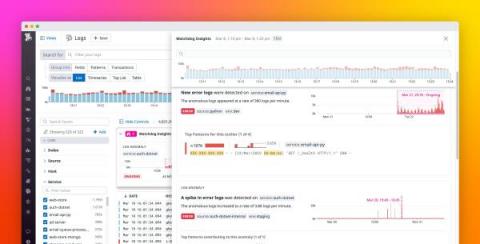
Accelerate incident investigations with Log Anomaly Detection

Modern DevOps teams that run dynamic, ephemeral environments (e.g., serverless) often struggle to keep up with the ever-increasing volume of logs, making it even more difficult to ensure that engineers can effectively troubleshoot incidents. During an incident, the trial-and-error process of finding and confirming which logs are relevant to your investigation can be time consuming and laborious. This results in employee frustration, degraded performance for customers, and lost revenue.

Best Practices for Container Security on AWS

Containers are superior to Virtual Machines (VM) in many aspects, including the benefits of being lightweight, easily scalable, highly portable, etc. AWS provides two primary container services i.e., Amazon Elastic Container Service (Amazon ECS) and Amazon Elastic Kubernetes Service (EKS). Although both ECS and EKS are growing in popularity but achieving security while using these services is relatively a new topic.

Upgrading vs Migrating - How Atlassian Scaled Developer Efficiency in One Week

With millions of monthly active users across Bitbucket and Jira, Atlassian relied heavily on the real-time telemetry they got from their open source instance of Sentry. However, because it took the equivalent of two full-time engineers to maintain their out-of-date instance, Atlassian started to explore paths to upgrade or migrate to SaaS, as the risk of things breaking increased with each new release.

The History of Cloud Native

Cloud native is a term that’s been around for many years but really started gaining traction in 2015 and 2016. This could be attributed to the rise of Docker, which was released a few years prior. Still, many organizations started becoming more aware of the benefits of running their workloads in the cloud. Whether because of cost savings or ease of operations, companies were increasingly looking into whether they should be getting on this “cloud native” trend.