Friends don't let friends stay on Puppet 3: tools to help you migrate to Puppet 7
Friends don't let friends stay on Puppet 3: tools to help you migrate to Puppet 7 with Erin O'Malley from Puppet.


The latest News and Information on DevOps, CI/CD, Automation and related technologies.
Simply open up Cloud Storage Manager, then go to the FILE and then SEARCH. Now the Search window will open up in Cloud Storage Manager. Choose the category of the item you want searched for, either an Azure Storage Account, Container, or a Blob can be searched. Type in the name of what you want to search for in the SEARCH box and then finally choose if you want an Exact Match, Starts with, Ends with or Contains, then press Search.
Two factor authentication (2FA) increases your account security further than just using a username and password. In addition to a password (the first factor), you need another factor to access your account. A great example to demonstrate this is when you withdraw money from an ATM. To access your bank account you need both your physical bank card and to know your PIN number. These are the two factors you need to withdraw money = 2 factor authentication!
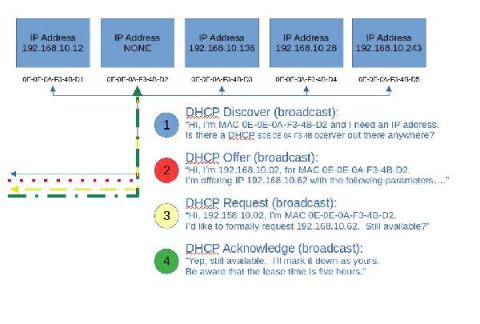
Let’s step back and take a very basic look at DHCP. In fact, let’s look at the analogy of assigning a street address to your house. Usually, this is done by the local 911 dispatch office, or some other central authority. They typically use either a survey map or a latitude, longitude pair to locate you, before they assign your house numbers from a pool of available addresses, compatible with other addresses in the area.