The latest News and Information on DevOps, CI/CD, Automation and related technologies.
2020 was, needless to say, not the best. Looking on the brighter side, in December, FireHydrant turned 2, and in spite of it all, we grew quite a bit. We raised our $8M Series A in May, our team grew nearly 4x in size, added some amazing features such as making FireHydrant Runbooks even more powerful with conditions, and great integrations, which you can find here. But even better, we got to work with all of you!
Moving full speed ahead into 2021, a year that is slated to be marked by unpredictability, fast-paced change, and (still) a lot of disruption – no organization can afford to allow such disorder to impact productivity, operations, and the business overall.
Building Site Reliability Engineering (SRE) teams is hard! There are so many articles and explanations of what SRE means, it’s easy to get lost. Going beyond understanding what the individual SRE role is into building and scaling a team of SREs is more of a challenge. It’s important to find the right information that will help you take your SRE team to the next level.
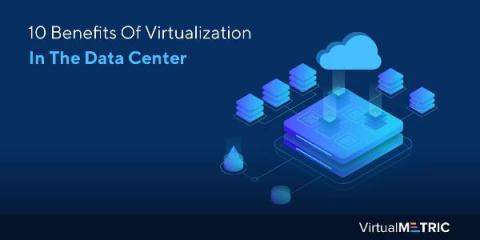
Although it is not well known to the general public, virtualization technology is widely used in technical environments for being useful when carrying out multiple tasks and for the possibilities it offers for better resource usage. Virtualization technology software is increasingly used by professionals in the sector, having already become an essential tool for the work of many of them.
How does one manage monitoring in the age of digital infrastructure as code? Also as code, of course! Combining HashiCorp Terraform Cloud and Checkly enables you to configure synthetic and API monitoring as part of your existing infrastructure codebase. It is flexible, programmable and will keep you out of maintenance hell, even at scale: it is monitoring for developers. Extending your existing Terraform Cloud configuration takes only two minutes. Let's take a look together.
Assuring the security of PostgreSQL and all open source database systems is critical as many learned with the PgMiner botnet attacks in December 2020. Having an understanding of, and visibility into, how these attacks happen and following standard best practices is the best way to make sure that your data is not at risk. This blog details the latest security issue with PostgreSQL, how to fix/prevent these attacks and how to ensure security of your PostgreSQL database instances.
In this article, we are going to see how we can integrate Google Cloud with Grafana. We will integrate Google Cloud SQL with Grafana and plot the metrics on Grafana. We will also look at how we can use Google Stackdriver as the data source in Grafana to expose the metrics of Google Cloud VM’s and platforms. To use Grafana immediately, we will be using Hosted Grafana by MetricFire.