JFrog Xray on Your Choice of Cloud Provider
Xray gives developers and DevSecOps teams an easy way to proactively identify open source vulnerabilities and license compliance violations before they manifest in production.


The latest News and Information on DevOps, CI/CD, Automation and related technologies.
Today, at Dash 2020, we unveiled new products and features on the Datadog platform that provide engineering teams with even deeper visibility into their distributed applications and infrastructure. With these additions, Datadog further streamlines every step of your release cycle, from shift-left testing in your CI/CD pipelines to profiling your code in production.
The Datadog Partner Network (DPN) is a rapidly growing registry of hundreds of leaders in the cloud service industry who choose Datadog to meet their infrastructure-monitoring needs. Partners are well-acquainted with the more than 400 technology integrations available to Datadog customers, but with the huge diversity in technical stacks used by our customers, there’s always demand for more customization and flexibility.
Testing within the CI/CD pipeline, also known as shift-left testing, is a devops best practice that enables agile teams to continually assess the viability of new features at every stage of the development process. Running tests early and often makes it easier to catch issues before they impact your users, reduce technical debt, and foster efficient, cross-team collaboration.
Being in the DevOps space, we're often asked questions about software deployment like, "What's the difference between continuous deployment and continuous delivery?", "What is continuous deployment?", and "Are continuous deployment and continuous delivery the same thing?" So first, let's start by clearly defining these terms.
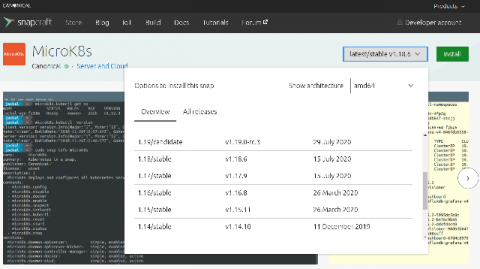
The Kubernetes 1.19 release candidate is now available for download and experimentation ahead of general availability later this month. You can try it now with MicroK8s. To get the latest Kubernetes on your machine, install MicroK8s and get a lightweight, zero-ops K8s cluster in no time: Or install from https://snapcraft.io/microk8s and select 1.19/candidate You can install MicroK8s on Ubuntu and all major Linux distributions or on Windows and macOS using native installers.
Puppet is a Continuous Configuration Automation tool that’s you can use to automate the configuration of your entire infrastructure. You can use it to manage the configuration of anywhere from a few, to thousands of servers or devices. Puppet consists of two main components: The Puppet Server The Puppet server is where you create and store your configurations and define which nodes specific configurations will be applied to.
Another year of empowering DevOps teams has passed and what a year it’s been! I’d like to take a moment to reflect on the journey, the milestones and challenges this past year encompassed. The last year has been our most transformational to date. We’ve had a huge amount of ups and downs and I’m incredibly proud to say that we got through it and our organization is more resilient, more aligned in our vision and closer as a result.