

Operations | Monitoring | ITSM | DevOps | Cloud

What is Apache Kafka and will it transform your cloud?

Everyone hates waiting in a queue. On the other hand, when you’re moving gigabytes of data around a cloud environment, message queues are your best friend. Enter Apache Kafka. Apache Kafka enables organisations to create message queues for large volumes of data. That’s about it – it does one simple but critical element of cloud-native strategies, really well.

From Monolith to Microservices

Today, monolithic applications evolve to be too large to deal with as all the functionalities are placed in a single unit. Many enterprises are tasked with breaking them down into microservices architecture. At LogicMonitor we have a few legacy monolithic services. As business rapidly grew we had to scale up these services, as scaleout was not an option.

Datadog on Kafka

As a company, Datadog ingests trillions of data points per day. Kafka is the messaging persistence layer underlying many of our high-traffic services. Consequently, our Kafka usage is quite high: double-digit gigabytes per second bandwidth and the need for petabytes of high performance storage, even for relatively short retention windows. In this episode, we’ll speak with two engineers responsible for scaling the Kafka infrastructure within Datadog, Balthazar Rouberol and Jamie Alquiza. They'll share their strategy in scaling Kafka, how it’s been deployed on Kubernetes, and introduce kafka-kit; our open source toolkit for scaling Kafka clusters. You'll leave with lessons learned while scaling persistent storage on modern orchestrated infrastructure, and actionable insights you can apply at your organization

Kafka monitoring: Metrics that matter

Kafka is a distributed streaming platform that acts as a publish-subscribe messaging queue by receiving data from various source systems and making it available to various systems and applications in real time. Key advantages for utilizing Kafka are that it provides durable storage, meaning the data stored within it cannot be easily tampered with, and it is highly scalable, so it can handle a large increase in users, workloads, and transactions when necessary.

Monitor Confluent Platform with Datadog

Confluent Platform is an event streaming platform built on Apache Kafka. If you’re using Kafka as a data pipeline between microservices, Confluent Platform makes it easy to copy data into and out of Kafka, validate the data, and replicate entire Kafka topics. We’ve partnered with Confluent to create a new Confluent Platform integration.

Apache Kafka Example: How Rollbar Removed Technical Debt - Part 2

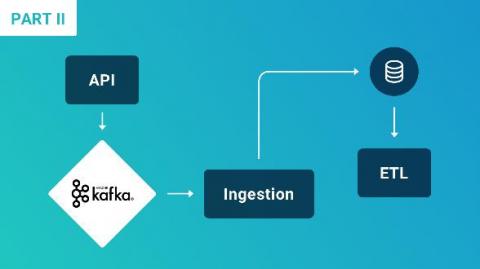
April 7th, 2020 • By Jon de Andrés Frías In the first part of our series of blog posts on how we remove technical debt using Apache Kafka at Rollbar, we covered some important topics such as: In the second part of the series, we’ll give an overview of how our Kafka consumer works, how we monitor it, and which deployment and release process we followed so we could replace an old system without any downtime.

Monitoring Kafka performance metrics

Kafka is a distributed, partitioned, replicated, log service developed by LinkedIn and open sourced in 2011. Basically it is a massively scalable pub/sub message queue architected as a distributed transaction log. It was created to provide “a unified platform for handling all the real-time data feeds a large company might have”.Kafka is used by many organizations, including LinkedIn, Pinterest, Twitter, and Datadog. The latest release is version 2.4.1.

Collecting Kafka performance metrics

If you’ve already read our guide to key Kafka performance metrics, you’ve seen that Kafka provides a vast array of metrics on performance and resource utilization, which are available in a number of different ways. You’ve also seen that no Kafka performance monitoring solution is complete without also monitoring ZooKeeper. This post covers some different options for collecting Kafka and ZooKeeper metrics, depending on your needs.