Operations | Monitoring | ITSM | DevOps | Cloud

5 self-service capabilities you need in your service desk

Self-service is a process by which end-users can find solutions and access resources independently. It was not so long ago that employees had to either write an email or approach a service representative in person to request a product or service or get an issue resolved. However, the modern workplace has evolved in such a way that self-service is key. One of the primary reasons is that offices are not just restricted to physical spaces anymore.


Understanding monitoring and observability

Roaming in the world of cloud technology not only helps you take a glance at the realm of cutting-edge technology but also helps you get familiar with concepts such as monitoring and observability. This article will cover an introduction to monitoring and the need for monitoring applications. From here, we will look at how you can utilize the data received when monitoring an application. This will allow us to understand how the concept of observability fits in with monitoring.

How to monitor Solr with OpenTelemetry

Monitoring Solr is very critical because it handles the search and analysis of data in your application. Similifying this monitoring is necessary to gain full visibility into Solr’s availability and ensure it is performing as expectedn. We’ll show you how to do this using the jmxreceiver for the OpenTelemetry collector. You can utilize this receiver in conjunction with any OTel collector: including the OpenTelemetry Collector and observIQ’s distribution of the collector.

10Web Booster: Speed Up Your WordPress Site with One Tool

When it comes to a website’s performance, we all know the universal rule: speed matters… a lot. Beyond a good user experience, it’s a key factor in what Google is specifically looking—and testing—for. If you need a refresher, here it is, straight from Google: And what exactly does Google consider fast?

Why Torq's Momentum Mirrors the Exponential Adoption of No-Code Security Automation

In just three quarters since Torq was officially launched, our visionary team has delivered a 385% increase in customers, resulting in 360% quarter-over-quarter growth. We’ve also boosted our headcount by 150% and now have more than 100 technology integration partners, including Armis, Orca, SentinelOne, and Wiz. In addition, we recently opened new offices in the UK, Spain, and Taiwan

Zero Trust: The New Security Model for Cloud Native Applications and Infrastructure

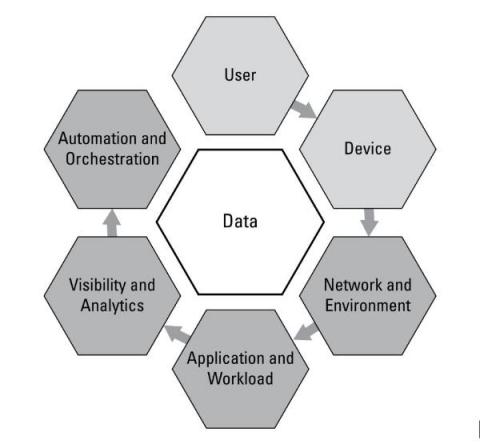
Zero Trust security is gaining attention and momentum as a security approach or mindset that can improve the security posture of enterprises as they continue to battle hackers. Because of this widespread attention on Zero Trust, every software security vendor seems to be jumping on the Zero Trust bandwagon. However, Zero Trust is not a product or service. No single product or vendor can sell you Zero Trust security.

Monitoring Unit Tests with OpenTelemetry in .NET

In this post, we’ll look at how you can use OpenTelemetry to monitor your unit tests and send that data to Honeycomb to visualize. It’s important to note that you don’t need to adopt Honeycomb, or even OpenTelemetry, in your production application to get the benefit of tracing. This example uses OpenTelemetry purely in the test project and provides great insights into our customer’s code. We’re going to use xUnit as the runner and framework for our tests.

Autoscaling Elasticsearch/OpenSearch Clusters for Logs: Using a Kubernetes Operator to Scale Up or Down

When we say “logs” we really mean any kind of time-series data: events, social media, you name it. See Jordan Sissel’s definition of time + data. And when we talk about autoscaling, what we really want is a hands-off approach at handling Elasticsearch/OpenSearch clusters. In this post, we’ll show you how to use a Kubernetes Operator to autoscale Elasticsearch clusters, going through the following with just a few commands.

Path-based Routing with HAProxy

If you host dozens of web services that reside at various subdomains, TCP ports, and paths, then migrating them to live under a single address could simplify how clients access them and make your job of managing access easier. It would mean moving from a hodgepodge of address schemes, such as: to a single address wherein services are designated by the URL’s path: The good news is that you don’t need to rearrange your entire network to make this happen.