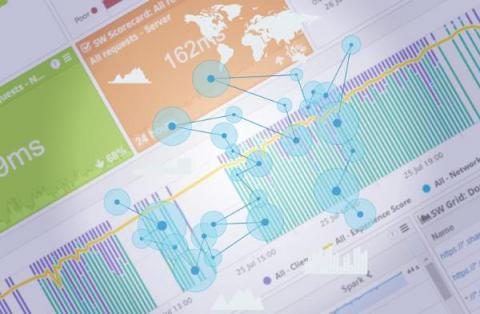
Predictive Analytics - The What, How and Why?
The Exoprise marketing team sat down with their CEO, Jason Lieblich, to discuss predictive analytics, market trends, and the technology’s usage in troubleshooting network issues.


The Exoprise marketing team sat down with their CEO, Jason Lieblich, to discuss predictive analytics, market trends, and the technology’s usage in troubleshooting network issues.
We have covered a plethora of topics on Active Directory (AD) in parts one to nine of this series on Active Directory Domain Services. In this final and 10th part, we will look at one other crucial aspect of AD—Group Policies and Group Policy Objects (GPOs). We will discuss what Group Policies are and what role GPOs play in the effective setup of any AD environment.
Kafka is an open-source program for storing, reading, and analyzing streaming data. It is open-source, which means it’s free-to-use amongst a big community of users and developers contributing to new features, upgrades, and support on a regular basis. Kafka can run on multiple servers as a distributed system, allowing it to take advantage of each server’s processing power and storage capacity.
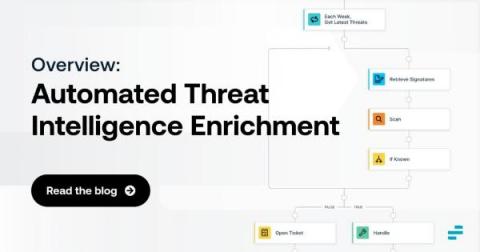
Discovering security threats is good and well. But, in many cases, simply knowing that a threat may exist is not enough. Instead, you also need threat intelligence enrichment. Threat enrichment plays a critical role in helping to evaluate and contextualize threats, root out false positives and gain the insights necessary to mitigate risks as efficiently and quickly as possible.
Near-instantaneous performance. Silky smooth user experience. This is what your digital users are expecting from your web application. If they perceive slowness or encounter failures in their user experience, they will readily switch to a competitor. Failures are a fact of life. The SRE (site reliability engineering) movement is helping craft modern digital systems that are engineered for resilience to failures.
Bloatware, or as we affectionately call it, junkware, has always been a problem for businesses across the globe. These unused and hidden programs that never see the light of day on our smartphones and laptops and yet take up all the space and cripple the performance of the devices are costing businesses billions of dollars every year.
It’s already been a stormy quarter with notable outages exceeding 240 hours. This spring saw two substantial cloud provider outages between Atlassian’s 9 day outage and shorter outages with CloudFlare. As reliance on cloud-based tools and services increases you should be asking, what are the best ways to monitor your site and make sure the data you’re reporting accurately reflects your site’s downtime and SLAs?