Operations | Monitoring | ITSM | DevOps | Cloud

How to Monitor Your Internet Speed with Telegraf & InfluxDB Cloud

Complaining about your crappy internet speed is a tale as old as time. Given the rapid shift for so many of us to work from home, our internet speed now affects us on a daily basis. Where in my house should I avoid taking Zoom meetings because of low download speed? Does my internet speed actually get worse in the evenings, or am I just paranoid? How far away from the microwave do I really need to be to ensure that my wifi isn’t impacted?

What type of barcode should I choose?

To have a well-structured inventory, it is necessary to identify the information concerning the physical assets that the company owns. It is not always obvious how to manage asset tagging. To do this, it is important to assign a unique identifier to each product. The simplest and least expensive method is necessarily the use of barcodes. But it is still necessary to choose the type of barcode that best suits our needs.

Understanding Alamofire Swift and Why is it So Powerful for iOS Development

The Alamofire Swift library is an open-source networking framework that has been designed to add the functionality of networking to iOS and macOS apps, being compatible with both. It can be used in both open source and commercial projects, and it is also the result of an international collaboration between people who are passionate about Swift. The main goal of this library is to reduce the amount of time and code that developers need in order to create networking applications.

Run UDP and WebSocket API tests to monitor latency-critical applications

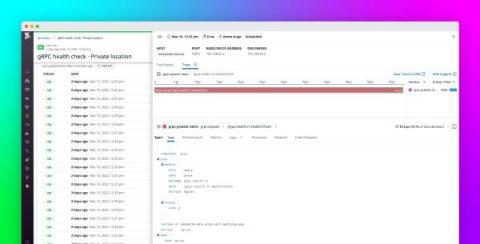
Datadog Synthetic Monitoring allows you to proactively monitor your applications so that you can detect, troubleshoot, and resolve any availability or performance issues before they impact your end users. With our API test suite, you can send simulated HTTP requests to your API endpoints, check the validity of SSL certificates, verify the performance and correctness of DNS resolutions, test TCP connections, and ping endpoints to detect server connectivity issues.

Seconds Matter: Why Monitoring Website Uptime Alone isn't Enough

It takes 50 milliseconds for visitors to decide whether to bounce from your website, that’s.05 seconds, or about half the time it takes you to blink. In website monitoring we talk a lot about uptime, and while making sure your site returns 200 OK is important, if your load time isn’t instant you’ll lose traffic regardless.

Stay Alert! Building the Coralogix-Nagios Connector

Ask any DevOps engineer, and they will tell you about all the alerts they enable so they can stay informed about their code. These alerts are the first line of defense in the fight for Perfect Uptime SLA. With every good solution out there, you can find plenty of methods for alerting and monitoring events in the code. Each method has its own reasons and logic for how it works and why it’s the best option. But what can you do when you need to connect two opposing methodologies? You innovate!

Infrastructure as Code, part 3: automate Kubernetes deployments with CI/CD and Terraform

This series shows you how to get started with infrastructure as code (IaC). The goal is to help developers build a strong understanding of IaC through tutorials and code examples. In this post, I will demonstrate how to create continuous integration and deployment (CI/CD) pipelines that automate the Terraform IaC deployments covered in part 1 and part 2 of this series. Here is a quick list of things we will accomplish in this post.