Operations | Monitoring | ITSM | DevOps | Cloud

How to improve your influence as an SRE

Improving your influence over the company will help you deliver high quality work as your goals will be closely aligned with those of the company. In this blog piece, Ricardo has explained how to improve your influence as an SRE. Balancing fast-paced business requirements with the demands of keeping production services stable is not an easy task.

Features, the forgotten feature of Puppet

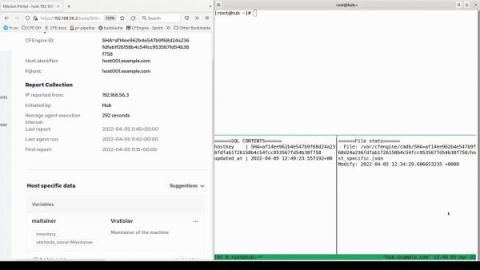
When you write enough Puppet code, you will eventually find yourself in need of a Facter fact or Puppet resource type that doesn’t exist in Puppet itself. Then, if you’re like me, you go to the Puppet Forge and see if someone else has written what you need. Oftentimes, you find what you need, add a new module to your Puppetfile or module metadata, and move on with your life.

Synthetic Testing and Real User Monitoring

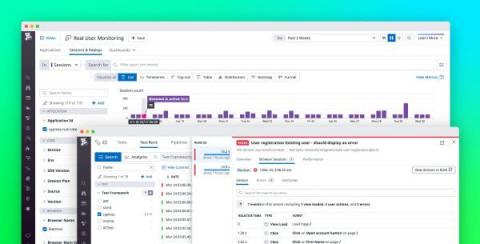
Synthetic Testing and Real User Monitoring are the most important tools in your performance toolbox. But they do different things and are useful at different times and many developers only spend time mastering one of these tools and only see a part of their performance problems, like trying to hammer in a screw. Let’s look at these tools, what they measure, and when to use them.

Playbooks in Action: Creating Effective, Repeatable Incident Resolution Workflows

While service incidents can be wildly dissimilar, they tend to have one thing in common: a need for quick resolution. Response teams need a robust, repeatable process to follow that ensures fast, mistake-free execution, especially for those 4 AM calls. Having a documented checklist saved where the entire team can access and use it at any time could make the difference between quick resolution or compounding the problem.

Enabling SRE best practices: new contextual traces in Cloud Logging

The need for relevant and contextual telemetry data to support online services has grown in the last decade as businesses undergo digital transformation. These data are typically the difference between proactively remediating application performance issues or costly service downtime. Distributed tracing is a key capability for improving application performance and reliability, as noted in SRE best practices.

Network AF, Episode 5: Building relationships as an internet analyst with Doug Madory

Network AF welcomes Doug Madory to the podcast. Doug is a veteran, a researcher, a writer and Kentik’s director of internet analysis. With his start in the U.S. Air Force within its Information War Center, Doug has now been working in the networking industry for 12 years. After the Air Force, Doug went on to work for Renesys, which was acquired by Dyn, which was later acquired by Oracle.

Epsagon-to-Lumigo: a step-by-step migration guide

At Lumigo. we believe in serverless technology, and our mission is to make serverless development easy and fast. For the past few months, we’ve been extending our observability and debugging capabilities, making it a breeze for developers to understand the end-to-end story of every request that goes through the system, find the root causes of issues and be able to easily address them.

New Tech Leader Survey Reveals Why the Time for Real-Time Operations is Now

“Customer obsessed.” “Customer-centric.” “Customer-first.” For CEO’s everywhere, setting and maintaining a coordinated focus on the customer has become a top priority when driving innovation. After all, for many organizations regardless of industry, digital customer experiences are what can make or break the bottom line.

3 Improvements Finance Teams Can Make To Their FP&A Process

FP&A is a strategic part of the finance organization and has the potential to drive important business outcomes. When done right, it can have a major positive impact on the future of the business. When done poorly, it can slow a company down. The role of FP&A has evolved. Today it isn’t just about taking inputs and crunching numbers — it’s about being a strategic advisor to the organization.