Operations | Monitoring | ITSM | DevOps | Cloud

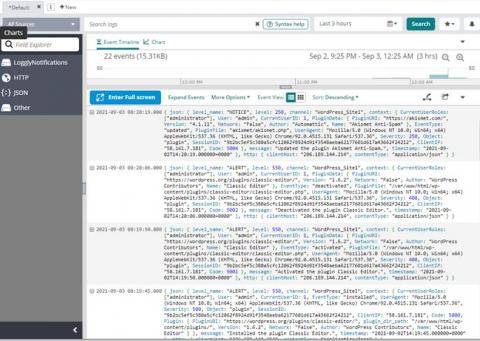
How attackers abuse Access Token Manipulation (ATT&CK T1134)

In our previous blog post on Windows access tokens for security practitioners, we covered: Having covered some of the key concepts in Windows security, we will now build on this knowledge and start to look at how attackers can abuse legitimate Windows functionality to move laterally and compromise Active Directory domains. This blog has deliberately attempted to abstract away the workings of specific Windows network authentication protocols (e.g., NTLM and Kerberos) where possible.

The future of testing with Launchable

In this video with with Kohsuke Kawaguchi (KK) from Launchable and Viktor Farcic we talk about testing K8s applications. Do we really need to write all the tests every time we make a change to the source code or make a release? That could take minutes or even hours. Wouldn’t it be better to run only the tests related to the changes we are making or the phase of the lifecycle of an application? Is the future of testing in AI and ML?

Elevate Your Cloud Security Posture with Splunk and Google Cloud

It’s more critical than ever to secure your company data and protect your workloads in the cloud. This blog post is a roundup of the latest technical resources and product capabilities by both Google Cloud and Splunk to enhance your threat prevention, detection, and response techniques, regardless of where you are in your business-transforming cloud journey.

How to Find and Fix IP Address Conflicts

IP address conflicts are an example of textbook “network problems”. There are multiple causes for IP conflicts, and, to make things even more fun, the behavior of devices experiencing an IP conflict can vary. Let’s explore IP conflicts in depth to help better understand what they are, why they occur, and how to fix IP address conflicts. An IP address conflict is a common network issue that occurs when two or more devices on the same network have the same IP.

Tailored Expansions Make Measuring Digital Work Easier for IT

Every IT environment is different. Some depend heavily on an efficient reactive support team, others need to manage a totally decentralized workforce, while some focus their resources on an infallible security and compliance team. Whatever your IT ecosystem looks like, you need to make sure you are taking into account the things that matter most to you, your IT department and your business at large.

DHCP server monitoring made easy with OpUtils

In today’s complex IT infrastructures, Dynamic Host Configuration Protocol (DHCP) servers play an indispensable role in automating IP allocation and configuration. A DHCP server’s capacity to allocate IPs to the requesting clients in real-time is one of the factors that ensures constant uptime of dynamic networks. However, even though a network’s availability depends on them, DHCP servers are often not closely monitored by IT teams.

Power Your Consul Service Mesh with HAProxy

Many of you use HashiCorp Consul for service discovery. It makes connecting one backend application or service to another easy: Your Consul servers store a catalog of addresses to all of your services; when an application within the network wants to discover where a service is listening, it asks Consul, which gives it the address.